Organising a family day that everyone enjoys
The hardest part of a family day: entertaining four generations at once. A step-by-step plan with a timeline, budget and the pitfalls that quietly make the day fall apart.
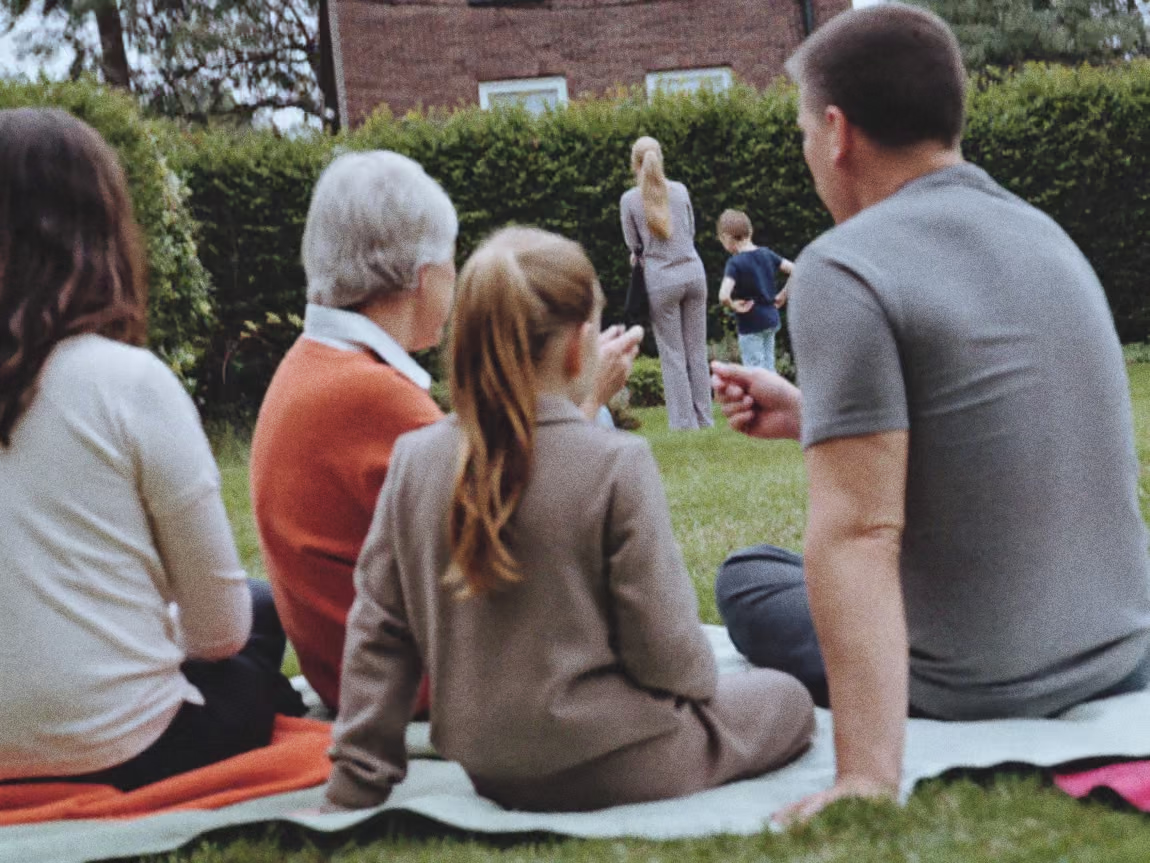
Organising a family day seems simpler than organising a company event, but in practice it often isn't. At a company event you have a group of people of roughly the same age with the same context. At a family day you have a three-year-old, a fifteen-year-old, an uncle who'd rather stand at the bar and a grandmother of eighty-two, and all of them need to feel the day was meant for them. Below is a step-by-step plan that takes this into account, with timeline, budget and the mistakes that quietly make a family day collapse.
Start with the question: what should this day do?
Before you think about venues or activities, ask one question: why are you actually getting together? The answer determines almost every choice that follows.
- Seeing each other again: then the activity is secondary and there needs to be plenty of room to talk. Short programme, long table.
- Celebrating an anniversary or birthday: then there's a focal point, and the programme should build towards it rather than around it.
- Involving the youngest generation: then the programme has to do something children enjoy, and give the adults room to join in without feeling awkward.
- Starting a new tradition: then repeatability matters more than spectacle. Something that can happen again next year.
Families who skip this question often end up with a programme that looks complete on paper but doesn't lead anywhere in practice.
The step-by-step plan
Step 1: Set the date before you arrange anything else
This is the step where most family days get stuck. As soon as you start checking who's available when, you get a puzzle that never quite works out. The practical approach: choose two or three candidate dates, send them round with a deadline of a week, and then fix the date for good. Waiting until everyone has replied is a guarantee of delay.
Spring and late summer generally work best. July and August seem logical but clash with holidays, and December is already full for most families.
Step 2: Count the group, and above all count the ages
The number of people determines the venue, but the age mix determines the programme. Make a simple overview: how many children under six, how many between six and twelve, how many teenagers, how many adults, how many people who aren't steady on their feet. That list prevents the classic mistake of an activity that a third of the group can't manage.
Step 3: Choose a venue that suits the group
Three options, each with its own trade-offs:
- At home or in the garden: cheap and familiar, but with more than twenty people it quickly runs into problems with space, toilets and parking.
- A hired hall or farm: more space and catering is usually possible, but expect to pay €400 to €800 for a half day in Twente.
- Outdoor venue or park: free or cheap and plenty of space, but entirely dependent on the weather and with no facilities.
For every option, check the dull practical things: parking, toilets, whether there's shade, and whether someone with a walker can get there.
Step 4: Build one programme, not separate activities
This is the difference between a family day that stays with people and one you sit through. The pitfall is a list of separate items: a bouncy castle, a barbecue, a quiz. They sit side by side and cause the group to break up into little islands, usually along age lines.
What does work is one set-up in which everyone has a role. A scavenger hunt with tasks that call for different skills: running, puzzling, recalling memories, recognising photos. The children do the physical work, the older generation supplies the knowledge, and both groups need each other. That makes people mix without it feeling forced.
A variant that does remarkably well with families: a quiz or scavenger hunt with questions about the family itself. Old photos, dates, stories only the oldest generation knows. That leads to conversations that wouldn't otherwise have happened.
Step 5: Plan shorter than you think
Three to four hours of active programme is the maximum for most families. After that, energy drops, small children get tired and the group starts to thin out on its own. Better a tight three-hour programme followed by free time than an eight-hour day that fizzles out halfway.
A workable structure for an afternoon programme: welcome with coffee (thirty minutes), activity (one and a half to two hours), a joint moment or prize-giving (twenty minutes), food and chatting afterwards (open-ended).
Step 6: Hand out tasks, and don't take everything on yourself
The organiser who does everything is the only one who doesn't experience the day. Divide things up beforehand: someone on reception, someone on catering, someone keeping time. If you have someone from outside build and run the programme, that burden disappears entirely, and for many families that's exactly the reason to outsource it.
What it realistically costs
Indicative prices for the Netherlands in 2026, per person, excluding venue:
- A self-organised programme with your own materials: €5 to €15 per person
- A hired activity or hosting for a half day: €15 to €30 per person
- A fully catered day with venue, catering and programme: €40 to €70 per person
With us, a compact bespoke concept for the whole group starts at around €195 for a half day. A fully bespoke programme with its own theme, set and hosts runs between €550 and €1,250. See what we build for family days.
Four mistakes that make a family day fail
- Focusing only on the children: understandable, but the adults then spend three hours as supervisors rather than participants. Afterwards the day doesn't feel like a success for anyone.
- Too much programme: filling every minute leads to rushing and not a single moment to really catch up, which for most families was the whole point.
- No plan B for the weather: an outdoor programme with no alternative is a gamble with the whole day at stake. Settle the alternative beforehand.
- The organiser does everything: that person is running around all day and has the fewest memories afterwards of a day that was meant for the family.
What you get from this
A successful family day comes down to one set-up in which all generations meet without it feeling forced. Set the date early, map out the age mix, choose one coherent programme instead of separate parts, and plan shorter than you're inclined to.
Would you like a family day where nobody stands on the sidelines? See the options for family days, or request a quote with no obligation.
Frequently asked questions
How far in advance should you plan a family day?
For a group of up to thirty people, six to eight weeks is ample. For more than fifty people, or if you need a venue with catering, allow three to four months. Most of the delay isn't in the organisation itself but in collecting everyone's availability: the earlier you fix the date, the fewer drop-outs.
What is a realistic budget for a family day?
Without venue hire and catering, an activity programme for a half day comes to €15 to €30 per person. With a hired venue, lunch and an activity, you're more likely at €40 to €70 per person. A compact bespoke concept for a whole group starts at around €195 with us.
How do you keep both small children and grandparents occupied?
Not by putting separate activities side by side, but by choosing one set-up in which everyone has their own role. A scavenger hunt where the children run and search while the grandparents decipher the clues works better than a bouncy castle for one and a terrace for the other. Mixed teams across generations are almost always the key.
How long should a family day last?
Three to four hours of active programme is the maximum for most families, with room afterwards to chat or eat. Filling a whole day sounds hospitable but often leads to a long tail in which energy drains away and the youngest children get overtired. Short and sweet works better than long and drawn out.
What do you do if the weather is bad?
Choose a plan B beforehand and actually settle it, rather than deciding on the morning itself. Book an indoor venue or choose a programme that works both inside and outside. We build concepts so that the core also holds up indoors, so that a rain shower doesn't ruin the day.
Would you rather not arrange it yourself?
We design and run the whole programme, at your venue or somewhere in Twente. Tell us what you have in mind and we'll send a proposal with a price.
Request a proposal