Photo scavenger hunt
with your phone
Each team gets a set of photos of places nearby. When you find the spot, you take a team photo there from the same angle as proof.

How a photo scavenger hunt works
A photo scavenger hunt revolves around one question that keeps coming back: where was this photo taken? Teams get a set of photos of places in the play area. Sometimes a recognisable building, more often a detail, such as a gable stone, a door knocker or a street sign half hidden behind a tree.
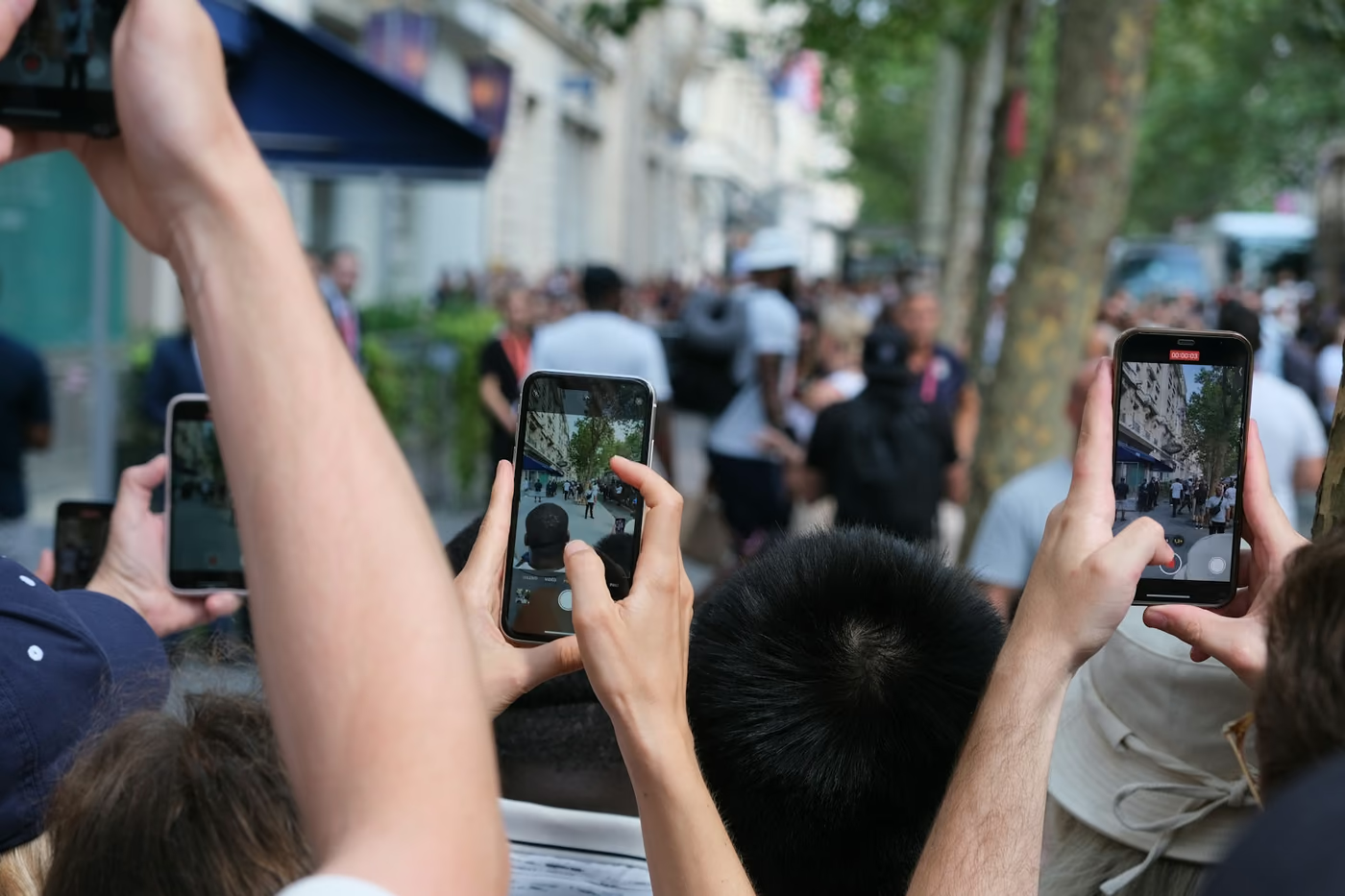
Once a team has found the spot, they take a team photo there from the same angle, with everyone in it. That photo is the proof. At the end we count how many places each team found, and if it's a tie, the team that got back first wins.
- Photos of places in your play area, taken by us
- Photo cards on paper, proof photos on your own phone
- No app or account needed, one phone per team
- Briefing at the start, hosts and results included
Photo scavenger hunt, photo marathon, scavenger hunt or city game
Photo scavenger hunt
The photo is the clue. Teams look for places we've photographed in advance, and the score is the number of places found. If you look carefully and know the area, you have a head start.
Photo marathon
The photo is the result. Teams get creative assignments and choose for themselves where to carry them out. Afterwards a jury judges which team took the best photos.
Scavenger hunt
The clue is a riddle. Teams solve puzzles and rebuses to work out where to go, following a fixed route. Here, puzzle skills win the day.
City game
A game across the whole city with different kinds of challenges in different places. A round with photos can be part of it.
Photos of your own surroundings
We walk the play area ourselves beforehand and take the photos there. That way we know for sure that every spot exists, can be reached and isn't behind a fence. The difficulty is in the framing. A whole church is easy, a bit of the tower from an odd angle is not.
That's why a photo scavenger hunt also works in surroundings people already know. Colleagues who walk across the same business park every day suddenly notice things they'd never spotted. For a group in a city they don't know, it's a way to really look at the streets.

For a team, a family or a class
A photo scavenger hunt is easy to explain and teams set their own pace. That makes it work for a company outing, a family day, a school trip or a group of friends. Children can join in as soon as they can compare a photo with what they see around them. Rather get creative with your own photos and a jury? Then a photo marathon is a better fit. If you'd like puzzles, take a look at the scavenger hunt.
We're based in Enschede and work across the Netherlands, in a town centre, village centre, park or business park. It can also be part of a bigger game through the city: see our city game.
The price depends on the play area, the number of teams and the duration. You'll have it within 1 working day of a short enquiry.
Frequently asked questions
Do you need an app for a photo scavenger hunt?
No. Teams get the photos on cards and take the proof photos on their own phone. One phone per team is enough. Nothing needs installing and nobody has to create an account.
What's the difference between a photo scavenger hunt and a photo marathon?
In a photo scavenger hunt the photo is the clue: you look for the spot we photographed. In a photo marathon you take your own photos for creative assignments and a jury judges them afterwards. The photo scavenger hunt is about looking carefully, the photo marathon about creativity.
How big is the play area for a photo scavenger hunt?
Usually an area you can cover on foot in an hour to an hour and a half, such as a town centre, village centre or large business park. Teams choose the order in which they look for the places, so they don't end up following each other around.
How long does a photo scavenger hunt last?
Around an hour and a half to two hours, including the briefing and results. When everyone's back, we look through the proof photos together. That's often where the biggest laughs are, at teams who were sure they were in the right spot and turned out to be a street away.
What does a photo scavenger hunt cost?
The price depends on the play area, the number of teams, the duration and the venue. You'll receive a proposal within 1 working day.
Tell us about your group
Interested in a photo scavenger hunt? Just fill in the short form and we'll send a proposal within 1 working day.
A photo scavenger hunt in your own surroundings
Tell us where you'd like to play and how many people are coming, and we'll send a proposal with the set-up and price.