Ren je Rot questions: 70 multiple-choice questions with A, B and C
Three zones, three answers and a group that has to choose. Seventy questions at three levels, with the rules for writing them and a playing schedule.
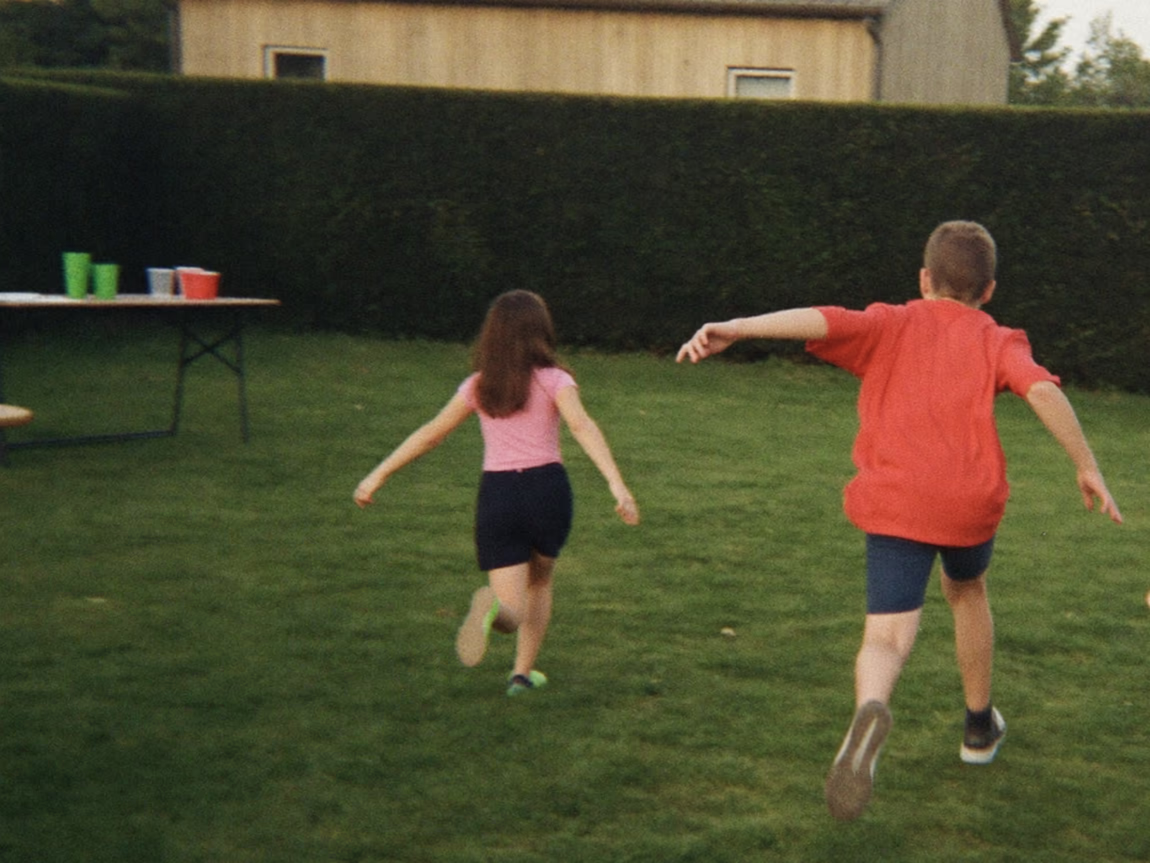
Ren je Rot is one of the few quiz formats where nobody can stay seated: a question is asked with three answers, and you have to walk to the zone of the answer you think is right. That walking is what makes the game, because you see straight away what the group thinks and you can still change your mind if the whole department heads the other way. Below is a generous set of questions at three levels, how to build them yourself and how many you need per playing time.
How the game works
You put three zones side by side on the floor: A, B and C. The quizmaster reads out a question with three possible answers and says when the group may walk. Everyone goes to the zone of the answer they think is right. Then the right answer is revealed and you see at a glance who had it.
Two ways to turn it into a competition:
- For points. Each correct answer scores a point. Everyone keeps playing the whole time and at the end there's a winner or a winning team. This works best with groups of more than twenty people and with groups who don't know each other yet.
- Elimination race. Anyone in the wrong zone is out. This goes faster and builds more tension, but after a quarter of an hour you're left with a handful of people and the rest are watching. So keep this variant short and save it for the end.
The combination works best in practice: first three blocks for points, then a final block as an elimination race with the ten best players. That way there's always something to win and still a tense finish.
How many questions you need
One question takes about a minute. Reading it out takes fifteen seconds, walking and hesitating another fifteen, announcing the answer ten, and the rest goes on cheering and grumbling. You don't want to cut that last part, because it's the part the group enjoys.
- 20 minutes: 18 to 20 questions
- 30 minutes: 25 to 30 questions
- 45 minutes: 38 to 42 questions
- 60 minutes: 50 to 55 questions
Add a quarter extra on top as a reserve. There are always two or three questions that turn out not to work on the spot, for example because half the room interprets the answer differently from how you meant it. You skip those, and then it's good to have more questions on your sheet.
Split the questions into blocks of ten to twelve and give each block its own theme. That's not only nicer to follow, it also gives you a natural moment to update the scores.
Writing questions that work
The two wrong answers do the work
A multiple-choice question is only as good as its wrong options. If one of the three answers is clearly nonsense, you're effectively playing a question with two answers and half the group gets it right by accident. So make sure the wrong options come from the same category as the right answer: for a capital city, other cities from the same country; for a year, years close by; for a quantity, numbers just above and below the right one.
One answer, no argument
Read every question back with this thought in mind: can anyone argue that another answer is also correct? If so, rephrase it or throw the question out. Pay particular attention to questions whose answer changes over time, such as population figures or who is the biggest at something. Those are right today and wrong in two years, and someone in the room knows it.
Spread the right answers across A, B and C
This is the detail almost everyone gets caught out by the first time. When you line up your questions, it often turns out that the right answer is remarkably often B, because you instinctively put the right answer in the middle. After five questions the smartest player in the room works that out and always stands in the middle zone. So count them and rearrange until the distribution is roughly even.
Write for the whole group
Think about who's standing there. In a department where ages range from twenty-four to sixty-four, questions about television from one period put half the group out of the game. Spread the topics deliberately: geography and nature are the most neutral, music and film the least.
Easy questions
You use these in the first block, to make everyone feel they're taking part. Expect three quarters to nearly the whole group to get them right.
- What is the capital of the Netherlands? A: Amsterdam. B: The Hague. C: Rotterdam. Answer: A
- How many legs does a spider have? A: six. B: eight. C: ten. Answer: B
- What colour do you get when you mix blue and yellow paint? A: green. B: orange. C: purple. Answer: A
- In which province is Enschede? A: Gelderland. B: Overijssel. C: Drenthe. Answer: B
- How many players from one team are on the pitch in football? A: ten. B: eleven. C: twelve. Answer: B
- What is the largest animal on earth? A: the elephant. B: the blue whale. C: the great white shark. Answer: B
- How many days does February have in a leap year? A: twenty-eight. B: twenty-nine. C: thirty. Answer: B
- Which planet is closest to the sun? A: Venus. B: Mercury. C: Mars. Answer: B
- How many cards are there in a standard pack without jokers? A: forty-eight. B: fifty-two. C: fifty-four. Answer: B
- How many pips does a die have in total? A: eighteen. B: twenty-one. C: twenty-four. Answer: B
- What colour is the top stripe of the Dutch flag? A: red. B: white. C: blue. Answer: A
- How many letters does the Dutch alphabet have? A: twenty-four. B: twenty-six. C: twenty-eight. Answer: B
- What does a panda mainly eat? A: bamboo. B: fish. C: meat. Answer: A
- In which country is the Eiffel Tower? A: Italy. B: France. C: Spain. Answer: B
- How many seconds are there in five minutes? A: two hundred and fifty. B: three hundred. C: three hundred and sixty. Answer: B
- What do you play badminton with, besides a racket? A: a ball. B: a shuttlecock. C: a puck. Answer: B
- What is the largest lake in the Netherlands? A: the IJsselmeer. B: the Markermeer. C: the Veluwemeer. Answer: A
- How many provinces does the Netherlands have? A: eleven. B: twelve. C: thirteen. Answer: B
- Which sea is Scheveningen on? A: the North Sea. B: the Wadden Sea. C: the Baltic Sea. Answer: A
- How many degrees is a right angle? A: forty-five. B: ninety. C: one hundred and eighty. Answer: B
Questions of medium difficulty
These are the questions that fill most of your game. Half to three quarters of the group get them right, and the two wrong options are believable enough to make people hesitate.
- What is the capital of Australia? A: Sydney. B: Melbourne. C: Canberra. Answer: C
- How many keys does a standard piano have? A: seventy-six. B: eighty-eight. C: ninety-two. Answer: B
- What is the chemical symbol for gold? A: Go. B: Au. C: Ag. Answer: B
- Roughly how many bones does an adult human have? A: two hundred and six. B: two hundred and fifty-six. C: three hundred and six. Answer: A
- Which river flows through Maastricht? A: the Maas. B: the Waal. C: the IJssel. Answer: A
- In which year did the Berlin Wall fall? A: 1987. B: 1989. C: 1991. Answer: B
- How many rings are on the Olympic flag? A: four. B: five. C: six. Answer: B
- How many players from one team are on the court in volleyball? A: five. B: six. C: seven. Answer: B
- Which organ produces insulin? A: the liver. B: the pancreas. C: the kidney. Answer: B
- What does the Dutch expression "de kat uit de boom kijken" mean? A: to wait and see before you do anything. B: to jump at something straight away. C: to make a fool of someone. Answer: A
- Which country is the largest in the world by area? A: Canada. B: Russia. C: China. Answer: B
- What is the longest river in Africa? A: the Nile. B: the Congo. C: the Zambezi. Answer: A
- Which animal is the fastest on land? A: the cheetah. B: the lion. C: the antelope. Answer: A
- In which country is Machu Picchu? A: Peru. B: Mexico. C: Bolivia. Answer: A
- Which Dutch city has the largest seaport? A: Amsterdam. B: Rotterdam. C: Vlissingen. Answer: B
- What is the largest desert in Africa called? A: the Sahara. B: the Kalahari. C: the Namib. Answer: A
- Which metal is liquid at room temperature? A: mercury. B: lead. C: tin. Answer: A
- What is the official language of Brazil? A: Spanish. B: Portuguese. C: Brazilian. Answer: B
- How many strings does a standard acoustic guitar have? A: four. B: six. C: eight. Answer: B
- What is the capital of Canada? A: Toronto. B: Ottawa. C: Vancouver. Answer: B
- Which Dutch city is known as the Lichtstad (City of Light)? A: Eindhoven. B: Tilburg. C: Helmond. Answer: A
- Roughly how many kilometres is a mile? A: 1.2 kilometres. B: 1.6 kilometres. C: 2.1 kilometres. Answer: B
- Which planet has the most distinct rings? A: Jupiter. B: Saturn. C: Uranus. Answer: B
- In which year did the Second World War begin? A: 1938. B: 1939. C: 1940. Answer: B
- What is the currency of Switzerland? A: the euro. B: the Swiss franc. C: the krone. Answer: B
- How many teeth does an adult human normally have, including wisdom teeth? A: twenty-eight. B: thirty. C: thirty-two. Answer: C
- Which Dutch painter made The Night Watch? A: Johannes Vermeer. B: Rembrandt van Rijn. C: Vincent van Gogh. Answer: B
- What is the capital of Norway? A: Oslo. B: Bergen. C: Stavanger. Answer: A
- What is the largest organ of the human body? A: the liver. B: the skin. C: the lungs. Answer: B
- How many chambers does a human heart have? A: two. B: three. C: four. Answer: C
Difficult questions
You use these when the group needs thinning out, or as the final question of a block. Expect a third of the group or fewer to get them right. Important: here too all three options need to be plausible, otherwise it feels like bad luck instead of knowledge.
- What is the largest island in the world? A: Greenland. B: New Guinea. C: Borneo. Answer: A
- Which element has atomic number 1? A: helium. B: hydrogen. C: oxygen. Answer: B
- In which year were euro notes and coins introduced in the Netherlands? A: 1999. B: 2002. C: 2004. Answer: B
- What is the highest mountain in Africa? A: Mount Kenya. B: Kilimanjaro. C: the Atlas Mountains. Answer: B
- How many players from one team are in the water in water polo? A: six. B: seven. C: eight. Answer: B
- Which ocean is the deepest? A: the Atlantic Ocean. B: the Pacific Ocean. C: the Indian Ocean. Answer: B
- Which Dutch province has existed for the shortest time? A: Flevoland. B: Limburg. C: Drenthe. Answer: A
- About how many degrees Celsius is absolute zero? A: minus 173. B: minus 273. C: minus 373. Answer: B
- Which of these animals has the longest pregnancy? A: the rhinoceros. B: the elephant. C: the blue whale. Answer: B
- In which year did the Watersnoodramp (North Sea flood) take place? A: 1944. B: 1953. C: 1962. Answer: B
- How long does light from the sun take to reach the earth? A: about eight seconds. B: about eight minutes. C: about eight hours. Answer: B
- What percentage of the earth's surface is covered with water? A: about fifty per cent. B: about seventy per cent. C: about ninety per cent. Answer: B
- What is the hardest natural material? A: quartz. B: diamond. C: granite. Answer: B
- Where are the smallest bones in the human body? A: in the ear. B: in the fingers. C: in the nose. Answer: A
- Which language has the most native speakers worldwide? A: English. B: Mandarin Chinese. C: Spanish. Answer: B
- How many countries does the Netherlands border? A: one. B: two. C: three. Answer: B
- What does the Dutch expression "iets met de Franse slag doen" mean? A: quickly and sloppily. B: very precisely. C: in secret. Answer: A
- How many minutes of play does an NBA game have? A: forty. B: forty-eight. C: sixty. Answer: B
- What is the highest point of the European Netherlands called? A: the Vaalserberg. B: the Posbank. C: the Sint-Pietersberg. Answer: A
- Roughly how many inhabitants does Enschede have? A: one hundred thousand. B: one hundred and sixty thousand. C: two hundred and twenty thousand. Answer: B
Questions about your own group
This is the block that gives the most and takes the most work. Questions about the people present, the company or the club itself do something general knowledge can't: they get the whole group laughing at the same things. Allow two to three hours of preparation, because you'll need to phone or email a few people.
Formats that work, each with three options:
- Which of us. Which of these three colleagues has ever played in a band? Put three names in the zones and have the three people named stand at the front.
- How many. How many years has our longest-serving colleague worked here? Three numbers that aren't too far apart.
- Which year. In which year did we move to this building? Always works, and usually it turns out nobody knows.
- Whose is this. A photo of a desk, a pet or a holiday snap, with three names underneath. Ask the people involved for permission beforehand.
- How it began. What was the first product this company sold? Three options, two of them plausibly wrong.
Two ground rules. Ask the people concerned beforehand whether they're happy with it, because a question that turns out awkward for the person themselves spoils the rest of the block. And make sure the answers are verifiable, so not from someone's memory but from a personnel file, an anniversary book or an old newsletter.
The zones and what you need
The game needs little equipment, but the set-up determines whether it runs smoothly.
- Three zones side by side, clearly separated. Indoors, floor tape or a rope works; outdoors, cones or marker discs. Make each zone big enough for the whole group, because with an easy question almost everyone walks to the same zone.
- Large letters A, B and C above or in the zones. An A4 sheet is too small, so make signs that can be read from the back.
- on a screen, a flip chart or on the signs themselves. Reading them out isn't enough on its own: after ten seconds half the group no longer remembers which answer went with which letter. on a screen, a flip chart or on the signs themselves. Reading them out alone isn't enough: after ten seconds half the group no longer remembers which answer went with which letter.
- Sound that can be heard at the back. With forty people in a room you won't manage without a microphone, especially as there's talking while people walk.
- A score sheet if you play for points, with the names or the teams underneath. Have someone other than the quizmaster keep it.
- A clear start signal before walking: a whistle, a bell or simply "now". Without a signal people start walking too early and the rest follow blindly.
Space: for forty participants allow a room of about ten by eight metres. The walking distance can be short, a few metres is enough. It's about the choice, not the sprint, and a short distance also keeps the game accessible for people who can't run fast.
Four things that bring the game to a halt
- Explaining for too long at the start. Three points are enough: three zones, walk on the signal, and what happens if you're in the wrong one. You explain the rest at the moment it comes up.
- Making the first questions too difficult. If by question two three quarters of the room are already in the wrong zone, the energy drains away immediately. Start easy, even if it feels a bit silly.
- Putting the right answer in the same zone too often. Count them before you lock in the block. A lopsided distribution is spotted within five questions.
- Giving the people who are out nothing to do. In the elimination variant, half the room is on the sidelines after a quarter of an hour. Give them a role: checking the zones, counting down, keeping score. Or play most of it for points and keep the elimination race for the finale.
A schedule for three quarters of an hour
- Explanation: three minutes, no longer.
- Block 1, general knowledge, ten questions: start easy and one point per question.
- Block 2, geography and nature, ten questions: medium level, with the last two difficult.
- Block 3, about your own group, eight questions: this is the block that gets the most laughs. Put it in the middle, not at the end.
- Scores so far: two minutes, read out loud from bottom to top.
- Block 4, elimination race, ten to twelve questions: with the ten highest-placed players, increasing in difficulty.
- Result: five minutes.
This schedule comes to about forty questions and takes anything from three quarters of an hour to an hour, depending on how much room you give the group to grumble about the answers.
Run it yourself or let us do it
You can easily run this game yourself. The set-up takes half an hour, you can use the questions above straight away and the rest is in the block about your own group. Allow four to six hours of preparation if you take that block seriously, and someone to keep score so the quizmaster can concentrate on the room.
Where it tips: whoever writes the questions can't take part. And above about forty participants the presentation becomes the main job, because you then have to work with sound and keep the room under control while people walk.
If you'd rather have us run it, we bring the questions, the zones, the equipment and the presentation to your venue. A compact version starts at €195 for the whole group. A larger programme with its own questions about the company, set dressing and several rounds starts at €550, depending on group size. On the Ren je Rot page you can read how we put that together, and via the quote page and you'll hear within one working day what it will cost for your group.
What you get from this
The seventy questions above are enough for a full hour of play. Pick twenty easy, twenty-five medium and ten difficult ones, check that the right answers are spread evenly across A, B and C, and put them in blocks of ten to twelve.
Invest your preparation time mainly in the block about your own group, because that's the part you can't download anywhere and it gives the most. Play most of it for points and keep the elimination race for the finale, so nobody is left on the sidelines halfway through.
If you're looking for more formats for the same evening, take a look at the overview of activities or the article on organising a pub quiz. For a complete afternoon or evening in the area, see company outings in Enschede for how we plan a programme like that.
Frequently asked questions
How many questions do you need for Ren je Rot?
Allow about one minute per question, including reading it out, walking, announcing the answer and the reaction from the room. For half an hour of play you therefore need twenty-five to thirty questions, for three quarters of an hour forty, for a full hour a good fifty. Add another quarter on top as a reserve, because there are always questions you skip on the spot because they turn out not to work.
Why always three answers and not four?
Three zones is the right size for this game, and it works best in practice too. With three zones the group is always split but never so spread out that you can no longer see who is standing where. Four zones need more space, more often produce a zone nobody goes to, and make guessing not worthwhile. With three options a guess is still one in three, and that keeps the people who know little in the game.
How hard should the questions be?
Aim for roughly half to three quarters of the group to be in the right zone for most questions. That keeps the game going for a long time without getting dull. Add two per block of ten questions that almost nobody knows, because you need those to thin the group out in the elimination variant. Questions where nobody can work out the answer feel unfair, so make sure the two wrong options are always plausible.
Can you play Ren je Rot indoors?
Yes, and it's actually the easiest version. You need three zones side by side, marked with tape, rope or blankets, and enough room for the whole group to stand in one zone. A hall or canteen of about ten by eight metres is enough for forty people. Keep the walking distance short, a few metres is fine, because it's about the choice and not about running.
What do you do with people who drop out?
Give them a role instead of a chair. Let eliminated participants check the zones, count down the time or keep score, or let them carry on playing as a team on paper. Better still is to use the elimination variant only for the last block and play the rest of the game for points, so nobody is sitting out after question seven.
Want us to run Ren je Rot?
We bring the questions, the zones, the equipment and the presentation to your venue. Tell us what kind of group it is and we'll come back with a proposal.
Request a proposal