Organising a games night: games for each group, a schedule and six themes
How to build a games night around the people who are coming, with games for each type of group, a schedule for the evening and six ideas for a themed night.
A good games night starts with the question of who is coming. Only then do you look in the cupboard. A group of keen board gamers wants something different from friends who mainly want to chat, and with eight people you play different games than with four. Below you will find how to structure the evening, which games suit which group, how to explain the rules without losing anyone and six ideas for a themed games night.
First the group, then the games
Most games nights that fall flat go wrong at the same point. Someone picks the game they like best, spends twenty minutes explaining the rules and half the table is on their phone after half an hour. So look at three things first.
How many people are coming?
Many board games are designed for three to five players. With six or more you end up with party games, team games or two tables side by side. Check the box for the number of players and do not count on it working with one extra.
How experienced are they?
People who mainly know Monopoly and Rummikub will not get much out of a game with a thirty-page rulebook. Start with something you can explain in a few minutes. Anyone who wants more can move to the second table later.
What do they want from the evening?
Some groups care about winning and some mainly want to laugh together. For the first group a strategy game works, for the second a game where you draw, guess or bluff. If in doubt, just ask in the group chat.
Which games suit which group?
Below is a breakdown by type of game, with well-known examples you will find in most toy shops. See them as examples. Any game your group knows and enjoys is better than a new game nobody understands.
Quick warm-ups
Short card and dice games you can explain in a few minutes, such as Heckmeck (Pickomino), Ligretto or Uno. Handy to start with while the last guests are arriving, and to play in between when a big game has finished.
Party games for a large group
Games where you play in teams and talk a lot, such as 30 Seconds, Codenames or Hints. In Codenames one player per team gives a one-word clue with a number, and their team has to guess the matching words on the table. It works with four players and with ten.
Cooperative games
In Just One one player guesses a word and the others each write down a clue. Identical clues are cancelled out, so anyone choosing the obvious word helps nobody. In Wavelength you have to guess where something sits on a scale, such as from cold to hot or from underrated to overrated. There is no loser at the table, so even sore losers join in.
Bluffing and suspicion
Games where a few players have a secret role, such as Werewolves. The game gets better the bigger the group, and it produces the best stories of the evening. Do make sure someone takes on the role of narrator.
Music and knowledge
In Hitster you place songs in the right order on a timeline, based on the year they were released. A quiz of your own works too, with questions about the news, about music or about the people at the table. You will find inspiration in our list of pub quiz questions.
Strategy board games
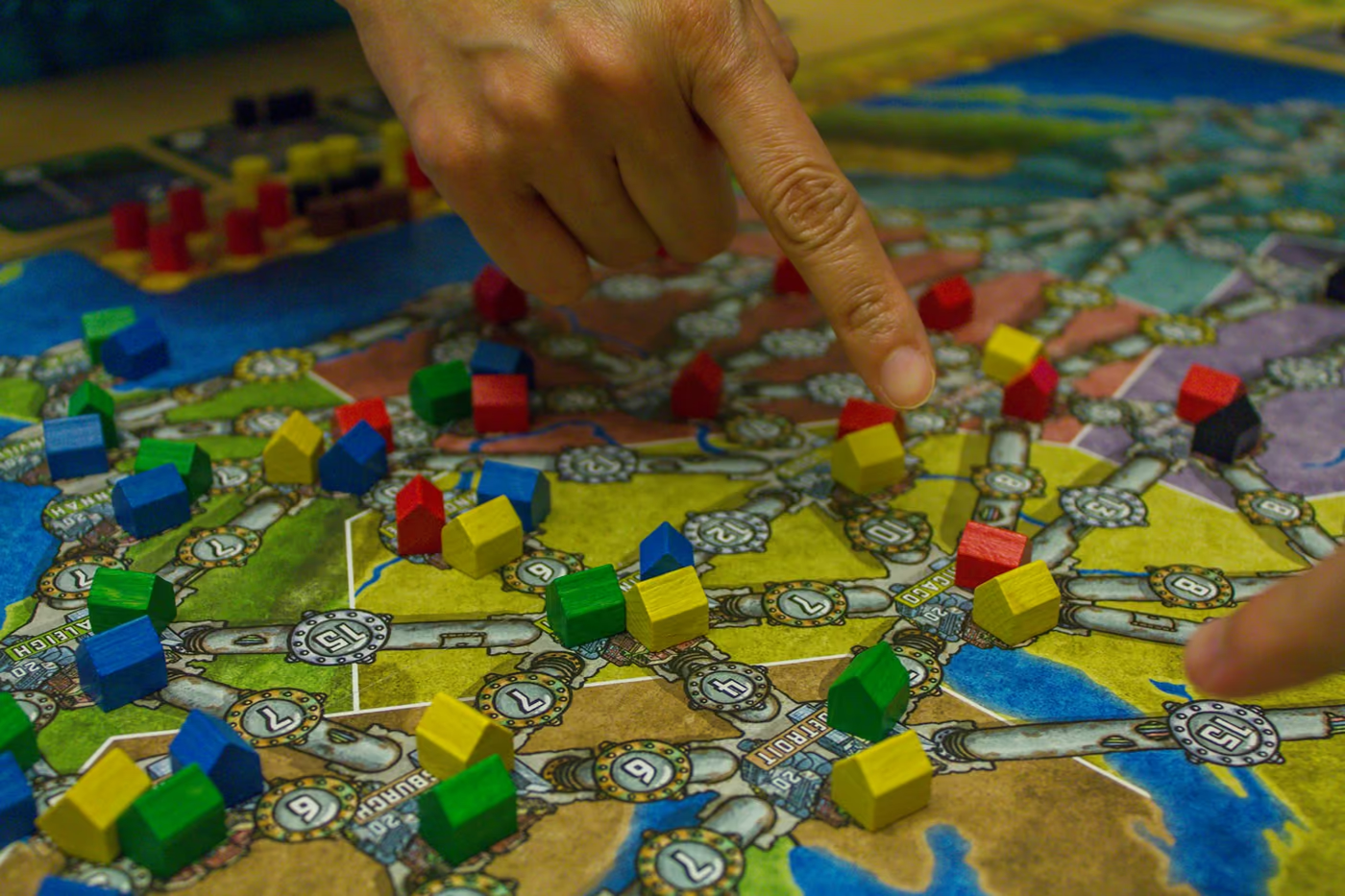
Catan, Ticket to Ride and Carcassonne are the classics many people started with. They need more explanation and take longer, so plan them as the main game and not as a warm-up. With more than five players, set up two tables side by side.
How to structure the evening
A games night has the same rhythm as a good party. A calm start, a high point in the middle and making sure it does not fizzle out. A schedule for an evening of about four hours could look like this.
- Arrival with drinks and something to eat. Put a quick game on the table that people can join as soon as they arrive.
- A party game everyone joins in. That breaks the ice and shows you what energy there is in the group.
- A break for food and catching up. Clear the table completely, so the next game feels like a fresh start.
- The main game. That is the game you are most looking forward to, a strategy board game or a bluffing game with the whole group.
- A short closer, for example a music game or a quick quiz, so the evening ends at a moment when everyone is still laughing.
Better to plan one game too few than one too many. A game you have to abandon halfway through because it is getting late feels like an evening without an ending. And if it is going well, you simply play another round of the game everyone enjoyed.
Explaining the rules without losing anyone
The explanation is the moment you lose the group. Whoever brings the game knows the rules best and should therefore explain them. Read the rulebook the day before and, if you can, play a few turns on your own. Then you will not need to leaf through it at the table.
- Start with the goal. What do you need to have at the end to win?
- Then explain what you do in a turn, with the pieces in your hand.
- Skip the exceptions until they come up in the game. Nobody remembers at the start what happens if the dice roll off the table.
- Play a practice round that does not count. That works better than ten minutes of talking.
- Help new players in their first turns, but do not play for them. Someone who makes a mistake themselves will remember the rule.
Food, drink and the table
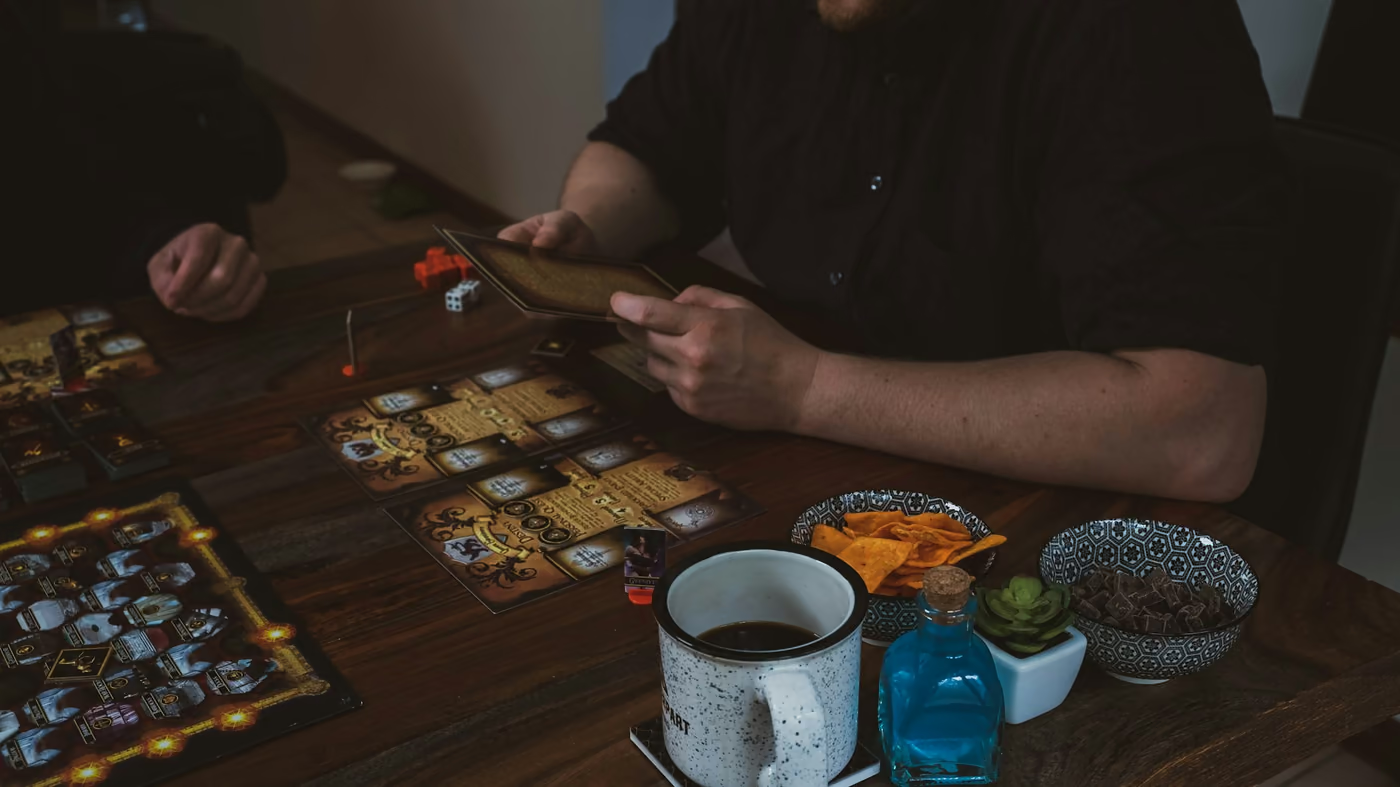
Greasy crisps and playing cards do not mix well. Put snacks on a side table or in small bowls at the edge, and choose things you eat with a fork or cocktail stick, such as cubes of cheese, sausage, olives or vegetables with dip. A hot meal is best eaten before playing or during the break, not between the game pieces.
Make sure there is enough light above the table, a few extra chairs and a place where coats and bags are not in the way. A chalkboard or sheet of paper on the wall with the running score adds excitement if you play several games and want an overall winner at the end.
A simple prize for the winner of the evening works better than you might think. A rotating trophy that moves to a different home at every games night, or an ugly ornament from the charity shop, gives everyone something to play for next time too.
Six ideas for a themed games night
If you have played the same games a few times already, give the evening a theme. It does not have to be big, but it gives guests something to look forward to.
1. Quiz night
Set up five or six rounds, each with its own subject, such as geography, music, film, photos and a round about the people in the room. Let teams of three or four play and only read out the answers at the end of each round. Want to see what an evening with a quizmaster looks like? Take a look at our pub quiz.
2. Bingo night
Bingo works with any group, even if there are people who do not like games. Play with music instead of numbers or hold a cheesy bingo with the ugliest prizes you can find. You can also book an evening with a host and prizes from us as bingo.
3. Murder mystery night
A murder mystery in which every guest gets a role with a secret of their own. Send out the roles a few days beforehand, so people can dress up.
4. TV night
Recreate games you know from television, such as a word game with letters or a round in which you describe terms as fast as possible. A homemade scoreboard and a host with a toy microphone complete the picture.
5. Retro night
Only games from the old days, such as Ludo, Stratego, Trivial Pursuit and Pictionary. Put on music from the eighties or nineties and ask guests to bring old boxes down from the attic.
6. Tournament night
Choose three short games and play them all with the same group. After each game the winner gets points, and at the end of the evening there is one champion. This works well with a group that likes to win.
With a large group or with children
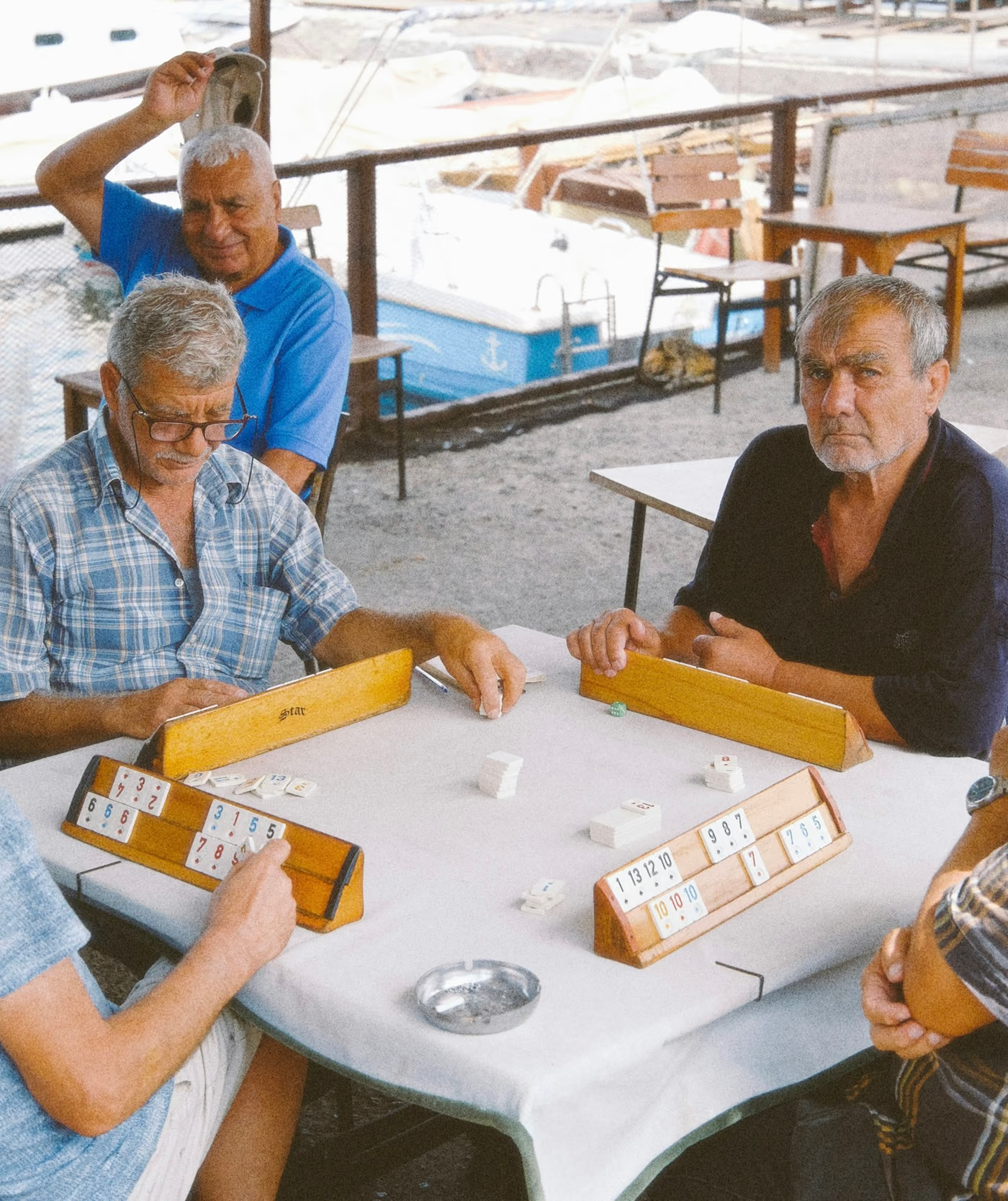
From around ten people, most board games no longer work with the whole group at once. Then choose team games, such as a quiz or a drawing game, or set up two or three tables, each with a different game, and let people swap after an hour. A bluffing game like Werewolf is one of the few games that gets better with more players.
If children are playing, choose games where luck plays a big part or where you play in mixed teams. An eight-year-old next to an adult in the same team makes it fairer than everyone against everyone. Plan the children's games early in the evening and save the long games for when they have gone to bed.
If the group gets so big that you lose track, or you simply want to play along yourself, you can hand over the hosting. We bring a quiz, bingo or game with a host to your home, canteen or hall, or to a location we arrange, from €195 for the group. Then all you have to do is make sure there are enough crisps.
Frequently asked questions
How many games do you need for a games night?
For an evening of about four hours, three to four games are enough. One quick game to start with, one party game for the whole group and one bigger game as the main event. Keep another short game ready in case there is time left over.
What are good games for a games night with lots of people?
Choose games played in teams or that allow a big group, such as Codenames, 30 Seconds, Hints, Just One or Werewolf. A quiz or bingo also works with a large group, because everyone plays at the same time.
How do you make a games night fun for people who do not like games?
Choose short games with few rules where talking and laughing matter more than winning, such as a drawing game, a music game or a cooperative game. Let people play in teams too, so they are not on their own.
How often should you hold a games night?
That depends on the group. Many groups of friends meet once a month or once a quarter, each time at someone else's home. Whoever hosts the evening chooses the main game, which brings variety naturally.
What should you bring to a games night?
Ask the host what is needed. A game of your own that you know well and can explain is usually welcome, as is something to eat or drink. Do not bring a game you have never played yourself.
Want to play along yourself?
We bring a quiz, bingo or game with a host to your home or venue, so you can simply sit at the table.
Prefer to look around first? See the bingo