Organising a day out with friends that actually goes ahead
A day out with friends rarely fails over money or ideas, but over decision-making. How to pick a date, who decides and what suits which group.
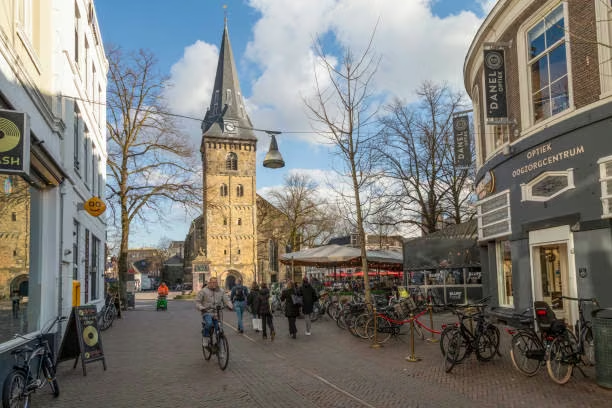
A day out with friends rarely fails because of money or a lack of ideas. It fails on decision-making. Someone throws it into the group chat, four suggestions and three conditions come back, and two weeks later there's still no date. Below you'll find how to break that: how to pick a date that works, who decides, what suits which group size, and how to sort out the money without it turning into an issue.
Why a day out with friends so often doesn't happen
The problem with a group of friends is that nobody's in charge. With a company outing someone names a date and that's the date. In a group of friends every suggestion is just a suggestion, and every suggestion prompts a counter-suggestion. That's exactly why outings with colleagues go ahead and those with friends often don't.
The second cause is that the group drifts apart. At twenty-five everyone's free on a Saturday, at thirty-five half have children, someone works shifts and one lives in another province. An outing that used to happen by itself then needs someone to organise it.
The answer isn't more discussion but less. One person makes the decisions, the rest say yes or no. That feels unfriendly in a group of friends, and it's the only way it works.
How do you pick a date that works?
Put two or three specific dates on the table and let people choose from them. Never ask when everyone's free, because that's an open question and with ten people it gets ten different answers, plus four people who only reply a week later.
Fix the date as soon as about eighty per cent can make it. Waiting for the last two costs you another two weeks, and in those two weeks three others become unavailable after all. In a group of ten, eight people is a good turnout, and the two who can't make it will be there next time.
Preferably choose a date six to ten weeks ahead. Under four weeks rarely works for a group of adult friends, and more than three months feels so far off that people don't dare say yes yet.
Put a deadline on the answer
Give people a week to respond and say that you'll make the call after that. Without a deadline a group chat carries on until the subject fizzles out by itself. With a deadline you have a date within seven days, even if two people haven't answered.
What suits which group size?
Group size determines more about what's possible than the budget does. Up to about six people you can do almost anything spontaneously: walk into somewhere, sit at one table, change plans on the way. No programme is needed and booking is optional.
Between six and twelve people it makes sense to book and a shared activity becomes worthwhile, because otherwise a group of that size naturally splits into two conversations. This is the group size where most is possible and the least organisation is needed.
Above twelve the character changes. You can no longer just turn up somewhere without a reservation, transport becomes a separate topic and you lose time waiting. From that size you need a programme in which everyone has something to do at the same time. Which formats work for that is covered in the article on group games for a large group.
What the group can help decide
Let the group choose between two options instead of asking open-endedly what people want. Two specific proposals get you an answer within a day, an open question gets you eight ideas of which seven never come up again. That goes for the date, the activity and where you eat.
Do keep one thing genuinely open: whether people can join for part of the day. In a group where not everyone can make the whole day, that saves three cancellations. Someone who only joins for the meal is at least there.
How do you sort out the money?
Agree one amount per person, collect it in advance and have one person pay for everything on the spot. That's less fair to the cent than splitting afterwards, and it saves you an evening of calculating and three awkward messages.
Name the amount before people say yes, not after. Someone who'd budgeted twenty euros and finds out they have to pay seventy will still come but won't enjoy it. In a mixed group of friends the amount is more often the reason to drop out than the activity.
Take account of differences in what people can spare. A cheaper set-up that everyone can join makes for a better day than an expensive one where three people cancel for financial reasons and don't say so.
Plan for inside or outside?
Plan outdoors as the first choice and agree the indoor version in advance, rather than improvising on the day. A group that hears at eleven in the morning that it's off because of rain won't get together again that day.
Fix the moment you'll decide: six o'clock the evening before, or nine o'clock on the morning itself. Say what happens then, too. With an agreed alternative, bad weather costs you one activity; without an agreed alternative it costs you the whole day.
For autumn and winter there are plenty of formats that work just as well indoors. What we run indoors is on the page about indoor activities.
What do you do when the group has grown apart?
Plan around the time rather than the activity if the group's lives are far apart. An afternoon from one to five works for someone with children, someone on shifts and someone with no commitments. An evening that starts at nine o'clock only works for part of the group.
That's almost always the real problem, rather than the question of what you're going to do. Groups think they're looking for an activity everyone likes, when they're looking for a time when everyone can make it. Once you have that time, the rest usually falls into place.
Bear in mind too that expectations differ. Someone who's dropped their children off for a day wants to get something out of it. Someone who's just had a busy week mainly wants to sit down. A programme with one clear activity and then room to talk suits both. A day that's fully planned from ten to ten suits neither.
How do you turn it into a recurring thing?
Fix the next date on the day itself, while everyone's still there. That's the only moment it works, because enthusiasm is high and the whole group is together. Two weeks later in a group chat the whole process starts again from the beginning.
What helps further is a fixed format: every six months, always the same month, and the organising rotates. Whoever organises also decides what it'll be, and doesn't need to put that to the group. That saves two weeks of discussion each time and spreads the work over the years.
Also agree a target amount that everyone's happy with. If it's settled in advance that it's around forty euros per person, that conversation doesn't need to be had every time, and whoever's organising knows what to stay within.
What does a day out with friends cost?
Most groups of friends spend between twenty-five and seventy euros per person for an afternoon including food and drink. That amount goes mainly on food and drink, not on the activity. A day where you only go out for a meal soon costs as much as a day with a programme added.
If you have a programme run for you, a compact activity starts at €195 for the whole group. With ten people that's €25 per person for the part that gives the day structure. A bigger programme with several activities or its own theme is between €550 and €1,250.
Look at what you save in time as well. Organising an afternoon yourself soon costs you four to six hours: collecting dates, researching options, booking, collecting the money and running things on the day. That's fine if you enjoy doing it, and outsourcing is worth it if you do it every time and never really get to join in yourself.
When do you have it organised?
Have it organised as soon as you want to join in yourself. The organiser of an outing is always a bit on the sidelines: they keep an eye on the time, know what's coming and never have a moment with nothing to think about. In a group of friends it's often the same person, every time.
The second reason is a one-off occasion: a milestone birthday, a farewell, a reunion of a group that hasn't seen each other for ten years. You don't want to find out halfway that the afternoon part doesn't work. What's possible with us is covered at private outings and on the page with all activities.
Frequently asked questions
How do you get a date fixed with a group of friends?
Put two or three specific dates on the table and let people choose, rather than asking when everyone's free. An open question gets ten different answers from ten people and takes weeks. Fix the date as soon as about eighty per cent can make it and don't wait for the last two.
How many people are too many for a day out with friends?
Above twelve the character of the day changes. Up to twelve you can walk into somewhere as one group, sit at one table together and decide spontaneously. Beyond that you have to book, arrange transport and have a programme, otherwise the group splits into cliques.
How do you split the costs without hassle?
Agree one amount per person, collect it in advance and have one person pay for everything. Splitting afterwards item by item always leads to a discussion about who drank what in a group of ten. A fixed amount in advance is less fair to the cent and much more pleasant in practice.
What do you do if half the group has children and the other half doesn't?
Choose a time rather than a compromise on the activity. An afternoon from one to five works for parents and for people without children, an evening programme starting at nine o'clock doesn't. The time resolves this difference better than adjusting the programme.
What does a day out with friends cost on average?
For most groups it comes to between twenty-five and seventy euros per person, including food and drink. A hosted programme for part of a day starts at €195 for the whole group, which for ten people comes to €25 per person for the activity part.
Would you rather not arrange it yourself?
We design and run the whole programme, at your venue or somewhere in Twente. Tell us what you have in mind and we'll send a proposal with a price.
Request a proposal