Group games for a large group of adults
A game that works with eight people falls apart with thirty. Which formats do scale, how to split teams and what keeps a large group together.
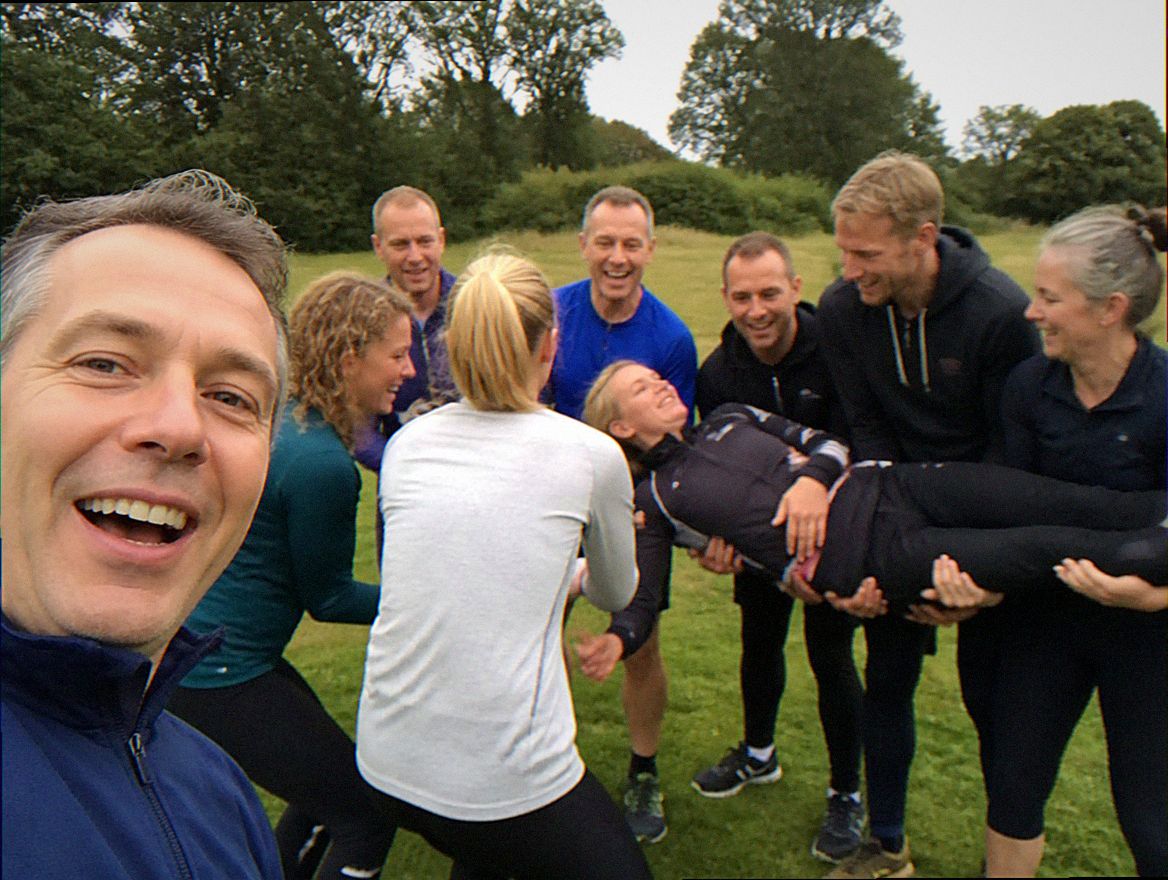
A game that works fine with eight people often falls apart with thirty. That doesn't make the game bad. The group size simply demands something different from the set-up. With a large group, the most important question isn't which game you choose, but how many people have something to do at the same time. Below you'll find which game formats scale, how to build an afternoon for twenty to sixty people, and the mistakes that leave half the group standing on the sidelines.
Why large groups need different games
The problem with a large group is almost always waiting time. A game where people take turns works brilliantly with eight people and is deadly with thirty, because everyone waits twenty-six turns for their own moment. During that wait the group reaches for their phones, and you won't get their attention back.
The second pitfall is visibility. With a large group, not everyone can see what's happening. If something funny happens at the front and nobody at the back hears it, you end up with two groups: the people taking part and the people standing around chatting. You won't get that second group back either.
What does scale is formats where everyone is busy at once, in teams of four to eight, with a central spot where the results are visible. That principle matters more than the exact content of the game.
The rule of thumb: divide by six
Take the group size and divide by six. That's roughly the number of teams you want. So five teams for thirty people, eight for forty-eight. Teams smaller than four go quiet when someone doesn't join in, and teams larger than eight automatically collect passengers who sit back and watch.
Five game formats that do scale
1. A quiz with teams and a visible scoreboard
The most reliable format for large groups, for exactly the reason above: everyone is busy at the same time, nobody waits for a turn, and the scores on a screen hold people's attention. Works from twenty to well over a hundred people without the set-up changing.
What makes the difference is variety in the rounds. Questions on paper only get monotonous after round four. Rounds where you have to listen, look, act out or point break the pace. How we put together a pub quiz.
2. A task game with scoring
Teams get a list of tasks that they complete in any order within a set time, each worth a number of points. Because teams choose their own route, there's no queue at any one task. It scales extremely well, because you only need to add more tasks as the group grows.
What matters is that the tasks differ in type. Something physical, something creative, something that tests knowledge and something that takes nerve, so that every team has members who are good at something.
3. A course with fixed stations
The classic set-up: teams rotate round a number of stations, each with its own activity. The advantage is that it's easy to follow and everyone has the same experience. The drawback is that it stands or falls with the timing: if one station takes longer than the rest, the whole rotation jams.
Rule of thumb: as many stations as teams, every station the same length, with a clear signal when it's time to switch. Traditional Dutch games and a team games day usually work on this principle.
4. A game where the group are the pieces
Blowing board games up to life size works surprisingly well with large groups, because there's always one part playing and one part watching, while both groups are engaged in the same thing. There's one central playing field, so everyone sees the same thing and attention doesn't scatter. How we approach life-size board games.
5. A storyline where teams have to exchange information
The strongest format if you want the group to really mix. Each team gets part of the information and can only complete the task by trading or negotiating with other teams. That forces contact between people who would otherwise have stayed in their own little group.
This format needs the most preparation, because the information has to be right and the puzzle has to be solvable. But it's the one people talk about most afterwards.
Icebreaker games for adults that aren't awkward
The classic introduction round, where everyone takes turns telling the circle something about themselves, almost never works with adults. It takes a long time, it's awkward for the quiet half of the group, and afterwards nobody remembers who said what.
What does work is getting to know each other as a by-product. Three formats:
- A task that can only be done together: put people in changing groups of three on something concrete. They talk without being prompted, because there's a reason to talk.
- Find the common ground: teams are asked to find three things all their members have in common, with obvious answers not counting. Always produces conversation and usually a few surprises.
- Trading for information: everyone gets a piece of information that someone else needs. To get further, you have to approach someone you don't know.
Indoors or outdoors
Outdoors has more space and tolerates more noise, and with a large group both count. Teams can spread out without hearing each other, and you can run formats that don't fit indoors. The drawback is that you depend on the weather and attention scatters more easily, because there's always something else to look at.
Indoors is more predictable and easier to steer, because everyone can hear you and sees the same screen. The limit is space: allow roughly one and a half square metres per person if people are seated, and double that if they also need to move around. A room that holds fifty people on paper is often too small for an active programme with fifty people.
The practical solution is to choose a programme whose core works both indoors and outdoors, and to decide a few days ahead. What you shouldn't do is improvise on the morning itself, because then half the props are missing. See what's possible indoors.
Which format suits which group
The same game format turns out very differently depending on who's playing. Four common situations.
A group of friends
Everyone knows each other, so introductions aren't needed and mixed teams are exactly the point. What works well here is competition with a clear winner, and tasks that draw on the group's shared history. The pitfall is that the familiar dynamics repeat themselves: the same people talk, the same people watch. Teams that you assign yourself break that pattern.
A society or club
Often a wide age range, from teenagers to people in their seventies. Choose formats that need different kinds of knowledge and skills, so that every age group shines at something. Purely physical activities exclude part of the group, purely knowledge-based ones exclude another part.
Colleagues
Here mixing is usually the aim, because in day-to-day work people are stuck in their own departments. So assign teams across the organisation and say so out loud, then everyone understands why. Be careful with tasks where people have to expose themselves, because the next day they're back at the same table with the same people.
A family or mixed company
The trickiest, because the age differences are the biggest and not everyone knows each other equally well. What works best here are tasks where generations need each other: children do the physical work, older people supply the knowledge. Then it mixes naturally. How we approach family days.
Building up an afternoon programme
A workable schedule for three to four hours with a group of twenty to fifty people:
- Twenty minutes: welcome and team allocation. Assign the teams yourself, because if you leave it to the group, people go and stand with the people they know and nothing mixes.
- Twenty minutes: a short opener in which the teams get to know each other and there are first points to earn. Low threshold, anyone can join in.
- One hour: the main item, in which teams work independently. This is where most of the time goes and where the energy comes from.
- Twenty minutes: break. Skipping it is tempting but costs you the second half.
- Forty minutes: a second item in a different format from the first. If the first was physical, make this one brainwork, or the other way round.
- Twenty minutes: final and results. Make sure the scores can still turn around until the last moment, otherwise half the group drops out as soon as it's clear who's winning.
One more practical point that weighs more heavily with large groups than small ones: sound. In a room with forty people talking, an ordinary voice doesn't carry far enough to give instructions. A microphone or speaker is then not a luxury but the condition the programme runs on. Test it in the room itself and not at home, because a room full of people sounds very different from an empty one.
Four mistakes with games for large groups
- Letting the group divide itself up: you end up with teams of people who already knew each other, and the mixing you wanted doesn't happen. Assign teams in advance, at random if need be.
- No visible scoreboard: without a running total nobody knows what it's all about and motivation sags halfway through. A scoreboard on a wall or screen is a small thing with a big effect.
- Explaining to the whole group at once: with thirty people, the back row doesn't hear half of it. Keep the central explanation short and give the details to each team on paper or through the hosts.
- Nobody steering it: with a small group a game runs by itself. With a large group you need someone to keep time, steer and decide when to switch. Without that role it inevitably overruns.
What it costs to outsource
Organising it yourself works fine and mostly costs time: allow a day of preparation for an afternoon programme, plus the props. If you'd rather have it done for you, a compact bespoke programme with us starts at around €195 for the whole group. A fully bespoke programme with its own theme and hosts costs between €550 and €1,250. Larger productions with more hosts or technical equipment start from €1,250.
Because we charge per programme and not per person, the price per participant falls as the group gets bigger. With large groups, that's often the point at which outsourcing works out cheaper than doing it yourself.
What you get from this
With a large group, the set-up matters more than the game. Make sure everyone has something to do at the same time, divide into teams of four to eight, make the scores visible, and put someone in charge of steering it. Choose three to four items that differ in format, and plan a break that you don't cut if you run late.
Looking for a programme for a large group that we come and run? See what we do for groups, or request a quote with no obligation. An overview of the game formats themselves is on the page about interactive games.
Frequently asked questions
From how many people is it a large group?
For game formats the tipping point is around twenty people. Under twenty you can still do one game with the whole group at once. Above that you need to work in teams, otherwise part of the group stands waiting and drops out. Above sixty it changes again and you need several hosts or a central presentation.
Which game works if half the group don't know each other?
Start with a format where people have to work together in changing small groups on something concrete, not with an introduction round. A task you can only solve together forces conversation without anyone having to introduce themselves to a circle of strangers.
How many games do you plan for an afternoon?
For three hours, three to four game formats are enough, with a break in between. Planning more sounds generous but leads to rushing. Better three items played out properly than six that get cut short halfway because time has run out.
What do you do with people who don't want to join in?
Give them a role that isn't taking part but still contributes: judge, timekeeper, photographer, score counter. That's almost always more effective than persuading them. In practice, some of those people step in halfway anyway, precisely because the pressure is off.
Do you need a lot of equipment for group games?
Not for most formats. The games that work best with large groups revolve around tasks, information and cooperation, not props. What you do need is someone to steer it, because with twenty people or more that's the part that makes the difference.
Would you rather not arrange it yourself?
We design and run the whole programme, at your venue or somewhere in Twente. Tell us what you have in mind and we'll send a proposal with a price.
Request a proposal