Hen and stag party tasks that actually work
A list of fifty tasks doesn't make a day. Which tasks suit the guest of honour, how to build up the afternoon, and where to draw the line.
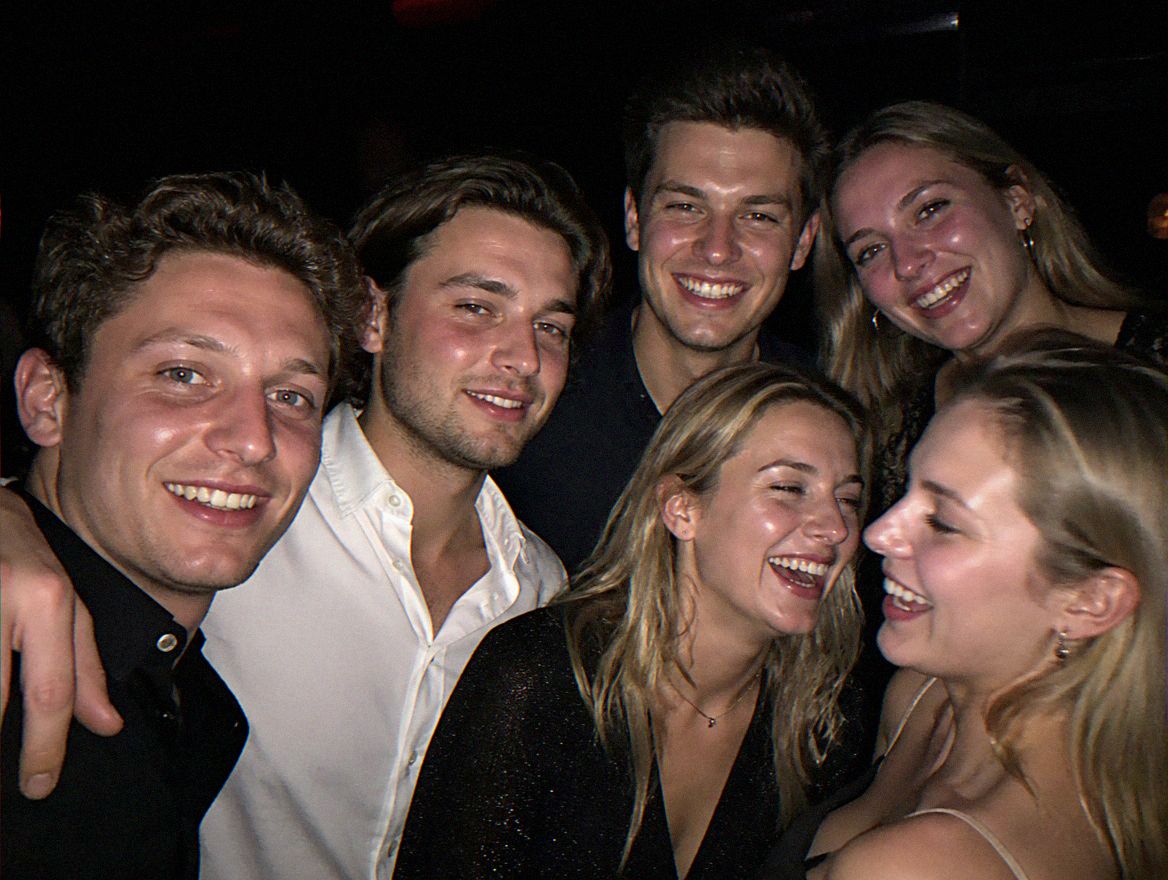
Search for hen or stag party tasks and you'll find lists of fifty ideas, usually in the same order and rarely with any explanation of why one idea works and another doesn't. The problem with a list like that is that separate tasks don't make a day. The tasks that stick are the ones that suit this specific person and the group around them. Below: how to make that choice, with concrete tasks for a hen party and for a stag do, a timeline that works in practice, and the four mistakes that tip a well-meant day off course.
Why most task lists don't work
Almost every list is based on the same principle: the guest of honour has to do something uncomfortable, and everyone else watches. That can be funny once, but when it becomes the common thread of the day, the roles shift. The guest of honour becomes the audience at their own party, and spends the rest of the afternoon waiting for it to be over.
There's a practical problem too. A list of separate tasks has no build-up. Task seven isn't more exciting than task two, there's no moment the day is working towards, and there's no reason for the group to stay together. Halfway through, a day like that falls apart by itself into little groups looking at their phones.
What does work is a day with one thread running through it, in which the tasks lead somewhere. It doesn't have to be a complicated story. Points that add up to a finale, an object you put together as you go, or a series of clues leading to a final location are enough to keep the group together.
Three questions to answer beforehand
Before you choose a single task, answer these three. They determine almost everything that follows.
- How far can it go? Ask someone who knows the guest of honour well but isn't helping to organise. The guest of honour almost always says anything goes, and that's rarely true.
- Who's in the group? Six friends from secondary school is a different day from twelve people, half of them in-laws who never speak to each other. With a mixed group, the first task has to mix people, otherwise everyone spends the whole day talking to the people they already knew.
- Where does the day end? A programme that ends at a dinner calls for a calmer finish than one that turns into a night out. Plan the end first, and work backwards.
Tasks for a hen party
What works out best in practice are tasks in which the guest of honour is the focus without being put on a stage on her own. Three categories that work.
Tasks in which the group has to know her
Ask the partner beforehand for twenty answers to questions about the guest of honour, and have the group guess. Anyone who gets it wrong gets a task, anyone who gets it right earns points. This works for two reasons: the guest of honour hears stories about herself all afternoon, and the group discovers that one half knows things the other half had never heard.
A variation that works well is laying out a timeline. Print photos from different periods and have the group put them in order, with a story for each photo from whoever was there. It costs little and gives a lot back.
Tasks with a tangible result
Making something she takes home gives the day a lasting finish. A book in which everyone fills a page, a recording in which every guest says a few words, or a set of photos in the same style that you later turn into a series. The making is the task, the result is the gift.
What matters is that the making itself takes time and needs teamwork. Having everyone write a note separately isn't a task, that's an envelope.
Tasks in which the group has to perform
A course, a puzzle or a series of challenges in which the group plays against each other in teams takes the attention off the guest of honour for a while, and that's exactly what gives a day room to breathe. Put elements like this in the middle of the programme, not at the start and not at the end.
Tasks for a stag do
The structure differs less than people think, but the form often does. What we see work best in practice:
- Something you can excel at: a measurement, a score, a record to be broken. Groups that aren't keen on role play will join in if there's a number attached.
- A task with a trade or skill in it: learning something and then competing with it works better than a task that's only about nerve. It also gives the quieter people in the group a moment.
- A storyline with an opponent: a character the group has to find, convince or beat gives direction to an afternoon. That works for groups who otherwise feel uncomfortable with tasks that have no clear goal.
- A final task the guest of honour can't get out of: one moment that's really about him is enough. The rest of the day doesn't have to be.
Games that work for both
A few formats work whoever the guest of honour is, and they're handy as filler between the bigger elements.
- Which of the three: three people all claim to have experienced the same story about the guest of honour, and the group guesses who it really was.
- Task cards with a time slot: every guest gets a card with a small task that has to be carried out at some point during the day, without the others knowing when. That keeps an undercurrent alive all day.
- The reverse quiz: the guest of honour gets questions about the guests instead of the other way round. It often produces the biggest surprises.
- A photo list: a series of photos that have to be taken, with points for each photo. Works well if you're walking through a city anyway.
A timeline that works in practice
The most common planning mistake is too much programme in too little time. A workable structure for an afternoon of about four hours:
- First half hour: welcome, something to drink, and one task that mixes the group. Don't put the guest of honour centre stage yet.
- An hour and a half: the main programme, made up of three to four elements that change form. Sitting, standing, walking, thinking.
- Half an hour: a break with food or drinks. People skip this and it's almost always a mistake, because without a break the second half sags.
- One hour: the finale, in which the points or the build-up of the day come together, and the moment that's really about the guest of honour.
- Last half hour: wrapping up, handing over the gift, and the transition to whatever follows in the evening.
Expect everything to take fifteen minutes longer than you think. Build in that margin instead of filling the programme to the brim.
Agree the roles within the organising team in advance too. One person keeps track of time and decides when an item gets cut short, one person looks after the props and sets up the next item while the previous one is still running, and one person keeps an eye on the guest of honour. That last role is almost always forgotten, even though it's the only one that can tell whether it's still fun or starting to turn. Anyone who does everything alone misses exactly that signal.
Tasks you're better off skipping
A few categories show up on almost every list and rarely work out well in practice.
- Tasks that put strangers through something: approaching a stranger in the street can be funny, but as soon as that person has to do something they didn't want to, it's no longer a game. It makes the whole group uncomfortable and rarely makes a good story.
- Tasks that lean on humiliation: putting on or doing something the guest of honour is genuinely embarrassed about changes the mood for the rest of the day. Even if people laugh, it's often the laughter of people who feel awkward.
- Anything involving a lot of drink: drinking tasks at the start of the day cut the programme short considerably, because very little of the rest gets done afterwards. Save that for the evening.
- Tasks with no end: anything that has to run all day with no clear moment when it's finished fizzles out. Give every task a beginning and an end.
There's a practical side too. Tasks that depend on the cooperation of third parties, such as a pub that has to allow something or a shop where something has to happen, fall flat as soon as that cooperation doesn't come. Ask in advance, or choose something you stay in control of yourself.
What a hen or stag party costs
Guide prices in the Netherlands, excluding food, drinks and any overnight stay:
- Organised yourself with your own props and tasks: €5 to €15 per person
- Single activity with a provider, for example a workshop or a track: €25 to €50 per person
- Fully hosted half-day programme through an agency: €40 to €80 per person
With us it works differently, because we charge per programme, not per person. A compact custom concept starts at around €195 for the whole group. A fully custom-built programme with its own theme, set and hosts costs between €550 and €1,250. With a larger group, the price per person drops accordingly. See what we build for hen and stag parties.
Four mistakes that can spoil a hen or stag party
- The guest of honour becomes just an audience: if every task revolves around her or him, the role is worn out after an hour. Make sure there are parts where the guest of honour simply joins in without being the centre of attention.
- The limit hasn't been discussed in advance: one task that goes too far sets the tone for the rest of the day, and there's no way to undo it. Discuss the limit with someone who knows.
- Too many tasks, too little time: a programme that runs behind feels rushed, and then the last task gets rattled through even though it was the most important one.
- The organiser does everything: anyone who spends the whole day keeping track of time, setting out props and preparing the next task doesn't get to enjoy the day themselves. Share the jobs out, or let someone else run it.
What you get from this
A hen or stag party that sticks in the memory doesn't need fifty tasks. It needs six to eight that suit this person, in an order that builds towards something, with enough breathing space in between. Start with the question of how far it can go, build the programme backwards from the end of the day, and make sure there's at least one moment when the group achieves something together instead of just watching.
Would you like a programme built around the guest of honour, not one that steamrolls over them? See the hen and stag party page, or request a quote with no obligation. Looking for something in the same spirit for another occasion? Have a look at the murder mystery dinner or the city game.
Frequently asked questions
How many tasks do you need for a hen or stag party?
Fewer than most lists suggest. For a three-hour afternoon programme, six to eight tasks are enough, as long as they differ in format and pace. Plan fifteen and you'll get through nine at most, and spend the rest of the day feeling behind on a schedule nobody knows except the organiser.
How do you know how far a task can go?
Don't ask the guest of honour, because they'll almost always say anything goes. Ask someone who knows them well and isn't helping to organise, such as a brother, sister or best friend. They'll usually give a more honest answer about where the limit lies.
Do tasks work if the group doesn't know each other?
That's exactly when they're useful, but then the first task needs a different purpose. Start with something where people work together in changing pairs or groups of three, so that everyone has talked to at least four others before the real programme begins. A group that has mixed joins in far more two hours later.
Can you do tasks in public places?
Plenty, yes, but think about what you're asking of strangers. Tasks where passers-by have to do or go through something quickly get out of hand and rarely make a good story. Tasks where the group achieves something itself and onlookers at most watch work better and cause less hassle.
What does a hen or stag party with a custom programme cost?
With us, a compact half-day programme starts at around €195 for the whole group. A fully custom-built programme with its own theme, set and hosts costs between €550 and €1,250. There's no per-person amount on top, so with a larger group the price per person drops accordingly.
Would you rather not arrange it yourself?
We design and run the whole programme, at your venue or somewhere in Twente. Tell us what you have in mind and we'll send a proposal with a price.
Request a proposal