Life-size Game of the Goose: 70 tasks and the rules
Seventy tasks in five types, the familiar squares from the original board and a set-up for an hour of play with four teams.
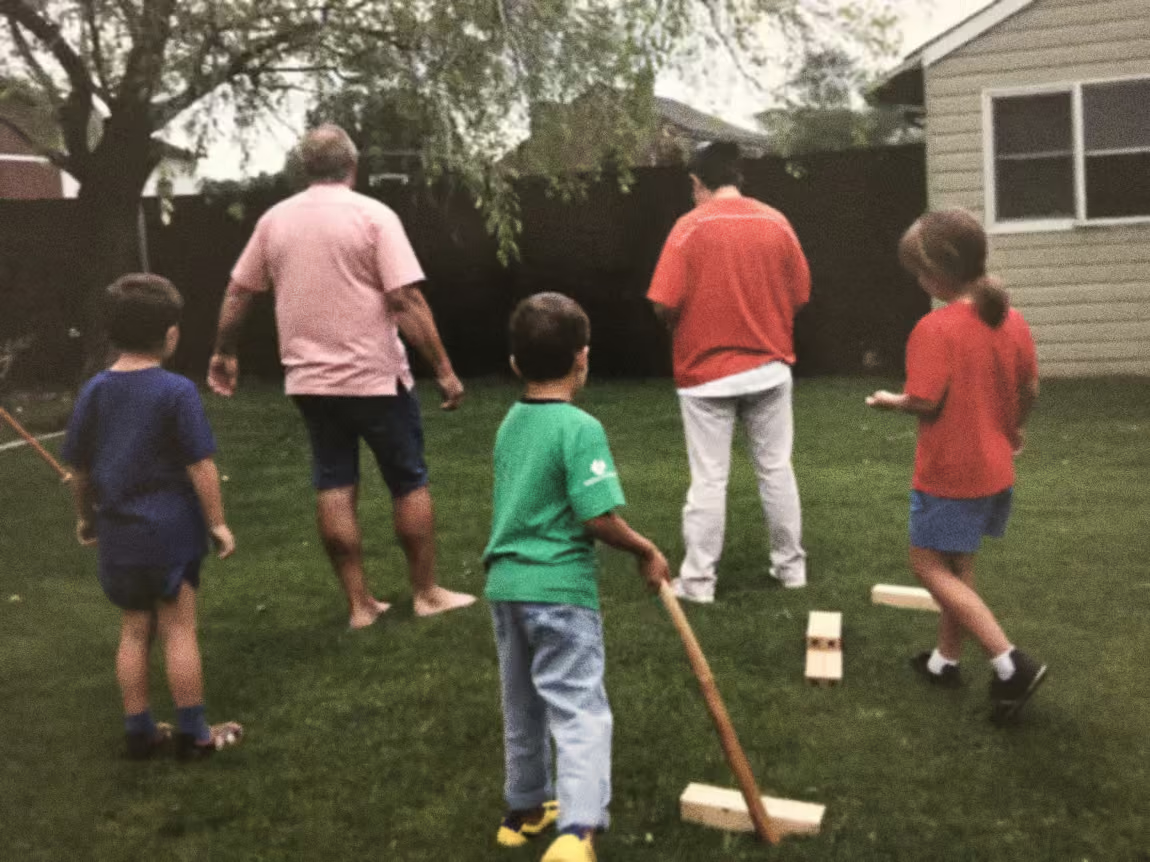
Life-size Game of the Goose is the well-known board game at full scale: the participants are the pieces, a big die decides how far you walk, and on every square a challenge awaits. The game stands or falls with those challenges. Below are seventy, arranged by type, plus the rules, the well-known special squares and a set-up you can use straight away for a children's party, a family day or a company outing.
The rules in brief
The group is split into teams, usually four. Each team picks one person as its piece, or walks across the board as a group. Taking turns, a team throws a big die and walks that many squares forward. On the square where the team ends up there's a challenge. If it succeeds, the team stays put. If it doesn't, it goes back one or two squares, depending on what you agree beforehand.
The first to land exactly on the last square wins. If you throw higher than needed, you walk the excess back, just like on the real board. That makes for a tense ending, because the leader sometimes needs another three turns to land exactly.
The special squares of the original
On the classic board of 63 squares there are a few squares with a fixed rule. Keep them, because everybody knows them and they give the game its character. On a smaller board you move them up in proportion.
- The goose (on 5, 9, 14, 18, 23 and then every four and five squares): you may move forward the same number of squares again.
- The bridge (square 6): you cross to square 12.
- The inn (square 19): you miss a turn.
- The well (square 31): you stay put until another team comes to rescue you by landing on the same square.
- The maze (square 42): you have to go back to square 39.
- The prison (square 52): you're stuck until another team frees you.
- Death (square 58): back to the start.
On a life-size board you can give the well and the prison a twist of their own. Have the team that's in there do a challenge to get out, instead of waiting. That stops a group standing still for ten minutes.
How to build the board
Lay the squares out in a snake or a spiral, so the teams keep crossing paths and see what the others are doing. Use numbered signs, coloured mats, markers or cones with a number. Make the special squares a different colour, so they stand out from a distance.
- Number of squares: twenty to twenty-five for children, thirty to forty for adults.
- Die: a big foam die. The throwing itself is part of the fun.
- Challenge cards: one card per square, or three piles (do, ask and together) where the square decides which pile you draw from.
- Host: one person who reads out the challenges, keeps the time and decides whether a challenge has succeeded.
- Playing time: allow one to one and a half minutes per turn. With four teams and thirty squares you're busy for about an hour.
Action tasks
These are the squares where the team has to do something within a set time. They keep the game moving and are the most fun to watch.
- The whole team stands in order of height within ten seconds.
- Hop with the whole team on one leg to the next square and back.
- Use your bodies to form the letter of the square you're standing on.
- Keep a balloon in the air for thirty seconds without using your hands.
- Fetch five different leaves or twigs within a minute.
- Do ten frog jumps at the same time, everyone in the same rhythm.
- Walk to the host and back with an egg on a spoon.
- Throw three beanbags into a bucket five metres away.
- Build a tower of six cups without it falling over.
- Everyone sings the chorus of a song the host names.
- Form a circle and pass a ball round without using your hands.
- Stand with the whole team on a newspaper without anyone touching the ground.
- Walk a lap around the board as wheelbarrows, in pairs.
- Copy exactly what the host does for one minute.
- Draw a goose together on a big sheet of paper, with everyone's eyes closed.
Questions
Question squares give the teams a moment's rest and keep the game fair for people who like running less. Adjust the level to the group. Below is a mix that works for adults and teenagers.
- How many squares does the original Game of the Goose board have? Answer: 63
- Which square is the bridge on? Answer: 6
- What happens if you land on Death? Answer: back to the start
- How many pips does a die have in total? Answer: 21
- Name five birds within twenty seconds.
- Name five board games within twenty seconds.
- How many provinces does the Netherlands have? Answer: 12
- Which animal is a lucky square on the Game of the Goose board? Answer: the goose
- What is the capital of Overijssel? Answer: Zwolle
- How many players does a football team have on the pitch? Answer: 11
- Spell the Dutch word "ganzenbord" backwards. Answer: drobneznag
- Name six things you'd find in an inn within twenty seconds.
- How many days does a leap year have? Answer: 366
- Which colour do you get when you mix red and white? Answer: pink
- Hum a song and let the other teams guess which one it is.
Teamwork challenges
These squares only work if the team talks it over. They're strongest at company outings and with families, because people who don't normally do anything together need each other.
- The team stands in a row and, without talking, has to line up in order of birthday.
- Walk ten metres all together while keeping one rope taut between you.
- One person is blindfolded and the rest guide them to a marker using words only.
- Come up with a team name and a cheer together, and perform it.
- Complete a twelve-piece puzzle within one minute.
- The whole team holds a hoop with one finger each and lowers it to the ground.
- Everyone says one word in turn; together you form a sentence of ten words.
- Draw a map of the playing field together, with everyone drawing one line.
- Build a human pyramid with the whole team, or a photo pose that the host approves.
- Within a minute, find something that everyone in the team has in common but that you can't see.
Chance and bad luck
A few squares with luck or bad luck make the game unpredictable. Don't use too many: on a board of thirty squares, four to six is enough, alongside the special squares of the original.
- Wind in your sails: two squares forward.
- Took a wrong turn: three squares back.
- Swap places with the team that is furthest behind.
- Pick another team to miss a turn.
- Throw again, but this time walk backwards.
- The team that is last to reach the host goes back two squares.
- You may pass a challenge on to another team.
- All teams move forward one square, except you.
- The first to give the host a high five may move forward one square.
- Rest square: everyone gets something to drink, and the game pauses for a moment.
Challenges for a children's party
For children between six and ten years old, short challenges of half a minute work best. Keep setbacks mild: one square back is enough, as going back to the start quickly feels unfair at this age.
- Jump ten times as high as you can.
- Imitate an animal and let the others guess which one.
- Run to the tree and back.
- Say your name backwards.
- Find something green and bring it with you.
- Spin around three times and then walk in a straight line to the next square.
- Pull the silliest face you can, and the host picks the winner.
- Everyone gives each other a high five.
- Count out loud to twenty together, taking turns.
- Sing a song from school.
- Walk like a goose to the next square, honking as you go.
- Guess what's in the bag just by feeling it.
- Throw the beanbag into the hoop.
- Do a little dance for a count of ten.
- Pick another child who gets to hand out a challenge.
A set-up for an hour of play
This schedule works for four teams of five to eight people on a board of thirty squares.
- Explanation and splitting into teams: ten minutes. Have each team choose a name and a colour.
- Playing: forty to fifty minutes, with the host at the board and a second person keeping track of the challenge cards.
- Prize-giving: five minutes. Also give a prize to the team that did the best challenge, not just to the winner.
Spread the challenges across the board so there are never three do-challenges in a row. A rhythm of do, ask, together and the occasional chance or setback keeps the game fresh.
Do it yourself or have it done for you
You can make a simple life-size Game of the Goose yourself with numbered signs, a big die and the challenges above. Allow a few hours of preparation for the cards and half an hour to set out the board.
If you'd rather have us run it, we bring the board, the materials and the hosting, and we write challenges around your group or company. A compact version starts at €195 for the whole group, a larger programme with several games at €550. On the page about life-size board games you can read how we put that together, and via the quote page and you'll hear within one working day what it will cost for your group.
If you're looking for more games for the same day, take a look at the rules of life-size Stratego, team games day activities or family days.
Frequently asked questions
How many squares does a life-size Game of the Goose need?
The real board has 63 squares, but outdoors that's too many. With thirty to forty squares a game with four teams takes about an hour, and everyone stays busy. If you want to get as close to the original as possible, keep the well-known squares (bridge, inn, well, maze, prison and death) and move them up in proportion.
How big does the playing field need to be?
Allow about two by two metres per square if teams need to stand on it with a few people at a time. For thirty squares in a snake across a grass field you need a field of about thirty by twenty metres. Indoors it can be more compact, with squares of one metre and one person per team as the piece.
How many people do you play life-size Game of the Goose with?
It works from about eight participants, split across four teams. Above forty people you make more teams or play on two boards at once, otherwise a team waits too long for its turn. Five to eight people per team is ideal: enough to do a challenge together, few enough that everyone takes part.
Is life-size Game of the Goose suitable for children?
Yes, from about six years old. Use shorter challenges that are done within a minute, make the penalty squares milder and put an adult with each team to read the challenges aloud. For a children's party of an hour and a half, a board of twenty to twenty-five squares is enough.
What do you do if a team fails a challenge?
Agree that beforehand and keep it simple. The most common rule: if the challenge fails, the team stays put and throws again on its next turn. A stricter variant is two squares back. Never make a team stand still for a whole round over a failed challenge, because then the group drops out.
Want us to run life-size Game of the Goose?
We bring the board, the die, the challenges and the hosting to your venue. Tell us how many people are taking part and we'll send a proposal with a price.
Request a proposal