Life-size Stratego: rules, ranks and how to split them across a group
All the ranks and exceptions, how to divide the cards across your group, a set-up for an afternoon and the mistakes that make a game stall.
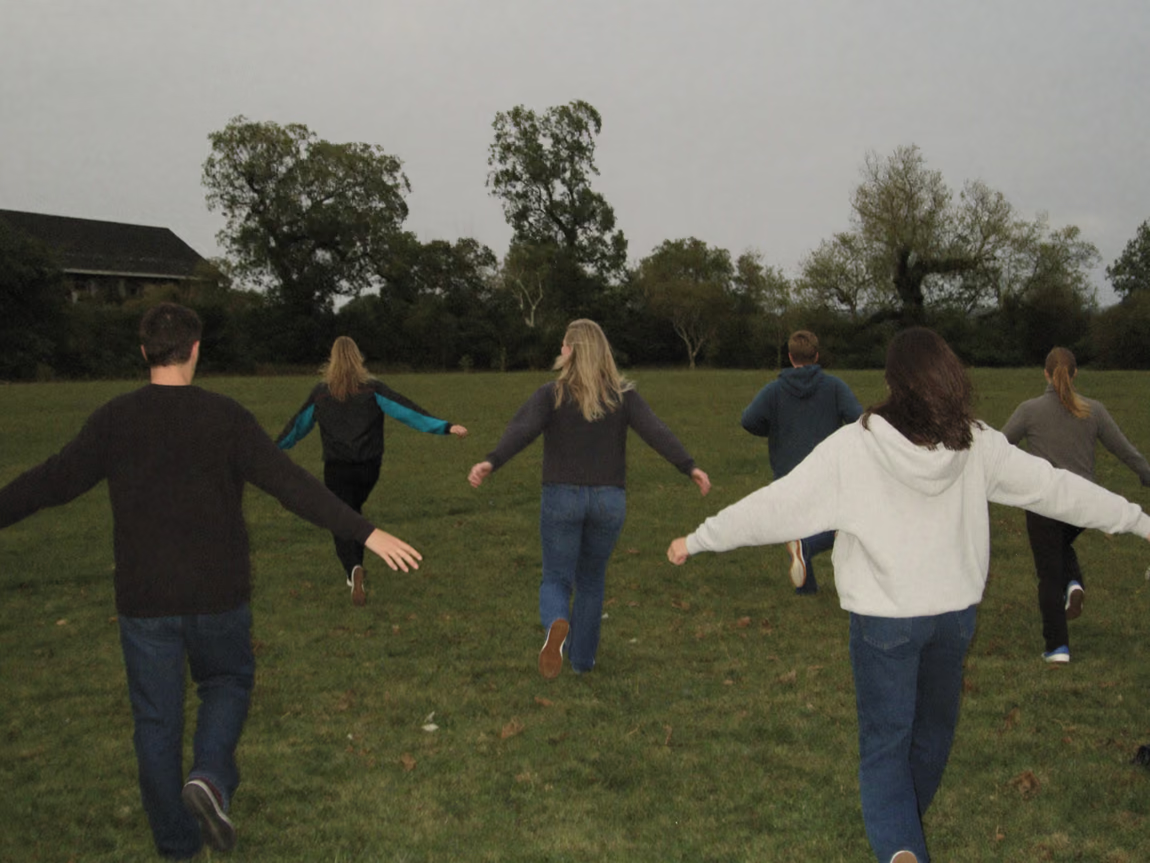
Life-size Stratego is the board game played in the woods or on a field: two teams, hidden ranks and a flag you have to capture without losing your own. Whoever tags an opponent compares ranks and the lower one is out. Below are the rules as they work best in practice, how to divide the ranks across your group, and the mistakes that make a game stall.
The aim of the game
The area is split in two. Each team hides a flag in its own half and defends it. The team that finds the opponent’s flag and brings it back to its own camp without being tagged wins. Along the way you’ll meet opponents. When someone tags or is tagged, both show their card and the higher rank wins the duel.
The nice thing about the life-size version is that you don’t know who you’re facing. On the board you can see the pieces standing there; in the woods someone comes running at you and you have to decide in a second whether to run away or take the duel on.
The ranks
Every player gets a card with a rank, which they carry hidden. The ranks are the same as on the board, from high to low:
- Marshal (10) beats everyone, except the spy when the spy attacks.
- General (9)
- Colonel (8)
- Major (7)
- Captain (6)
- Lieutenant (5)
- Sergeant (4)
- Miner (3) is the only one who can defuse a bomb.
- Scout (2) is weak, but there are plenty of them. Ideal for finding the flag.
- Spy (1) beats the marshal, but only if the spy does the tagging.
There are also two special cards. The bomb beats anyone who attacks it, except the miner. A player with a bomb isn’t allowed to tag and stays within a few metres of their spot, usually around the flag. The flag isn’t a player but an object, such as a real flag, a ribbon or a scarf.
How to split the cards across your group
On the board each team has forty pieces: one marshal, one general, two colonels, three majors, four captains, four lieutenants, four sergeants, five miners, eight scouts, one spy and six bombs. A normal group has fewer players, so you split the cards in proportion. This split works well in practice:
- 8 players per team: marshal, general, colonel, captain, miner, scout, spy and bomb.
- 12 players per team: marshal, general, colonel, major, captain, sergeant, two miners, two scouts, spy and bomb.
- 20 players per team: marshal, general, two colonels, major, two captains, lieutenant, sergeant, three miners, five scouts, spy and two bombs.
Always keep one marshal and one spy per team, and at least as many miners as bombs. Without miners nobody can get to a flag guarded by a bomb, and the game grinds to a halt.
Tagging and duels
A duel starts with a tag. Both players stop and show their card, to each other or to a referee standing nearby. The higher rank wins. The loser is out and goes back to their own camp.
- Equal rank: both players are out.
- Spy against marshal: if the spy tags, the spy wins. If the marshal tags, the marshal wins.
- Someone tags a bomb: the attacker is out, unless it’s a miner. The miner clears the bomb and the bomb player is out.
- Lost your card or won’t show it: you’re out.
Agree beforehand that a tag is a tag and not a shove. In woods full of roots and branches, that’s not a pointless rule.
Back in the game
What happens to players who are out decides how long the game lasts. There are two variants:
- With a bench. Anyone who’s out walks back to their own camp and collects a new card from the host. That’s usually a low rank. This keeps everyone in the game, and it works best for company outings and children’s parties.
- Without a bench. Out is out. The game gets shorter and more tactical, because every rank counts. This variant suits competitive groups and a second round.
In the variant with a bench, give the bench a limited supply of high cards. Otherwise a marshal who’s been knocked out is back a minute later, and tagging loses its tension.
The flag
- The flag has to be visible to anyone standing close by, so it can’t be buried or kept in a bag.
- Nobody may stand on the flag permanently within a radius of a few metres, except a player with a bomb.
- Anyone who picks up the flag and gets tagged drops it where they were tagged. The flag’s team may then put it back.
- The flag has to reach your own camp with its carrier still in the game. Only then is the game won.
A plan for an afternoon
- Explanation and handing out ranks: fifteen minutes. Let everyone look at their card and tuck it away, and explain the special ranks one more time.
- Hiding the flag and taking positions: ten minutes. Each team discusses in its own camp where the flag goes and who guards it.
- First round: thirty to forty minutes.
- Break and swapping halves: ten minutes.
- Second round: thirty to forty minutes, possibly without a bench.
- Result: five minutes.
Where it goes wrong in practice
Too few scouts
If you only hand out high ranks, you get a game where nobody dares to cross into the opponent’s half. Scouts are cheap and fast, and they’re the ones who find the flag. With larger groups, make sure about a quarter of each team are scouts.
No referee
With twenty players per team, duels happen fast and all over the place. Put one or two referees on the field to decide in cases of doubt. That prevents arguments that bring the game to a halt for ten minutes.
A field that’s too open
On a bare grass field you can see everyone coming and the team with the fastest runners wins. Where you can, play in woods or a park with trees and bushes, so it’s about tactics and nerve again.
No time limit
A well-defended flag can stay put for an hour. Agree an end time and a second way to win, for example the team with the most duels won. That way there’s always a result.
Do it yourself or have it done for you
You can organise life-size Stratego yourself with printed cards in plastic sleeves, two flags, some ribbon for the halfway line and a few referees. Allow an evening to prepare and an hour to mark out the area.
If you’d like us to handle it, we bring the cards, the flags, the barriers and the hosts, and adjust the ranks to your group. A compact version starts at €195 for the whole group, a bigger programme with several games at €550. On the page about life-size board games you can read how we approach it, and via the quote page and you'll hear within one working day what it will cost for your group.
For more games for the same day, take a look at the challenges for life-size Game of the Goose, fox hunt and team games day activities.
Frequently asked questions
How many people do you need for life-size Stratego?
It works from about sixteen participants, eight per team. Below that you don’t have enough ranks to allow for tactics. At the top end it works up to around forty per team, as long as the area is big enough. Above eighty participants you’re better off playing on two fields at once, otherwise it takes too long for anyone to find the flag.
How big should the area be?
Allow at least a football pitch for twenty players, and preferably a stretch of woods or a park with trees and bushes to hide behind. An open grass field works too, but then you see each other coming from far off and it mostly becomes running. The halfway line has to be clear, for example marked with ribbon or cones.
How long does a game of life-size Stratego last?
A round usually lasts twenty to forty minutes. If the flag is captured faster, you simply play a second round with the roles reversed. Always set a time limit, for example forty-five minutes. If the flag still hasn’t been found by then, the team that has knocked out the most opponents wins.
From what age is life-size Stratego fun?
From about nine, children understand the ranks and the exceptions. For younger children, leave out the bombs, miners and spy and play with numbers only: highest number wins. With adult groups and company outings, stick to the full rules, because that's what the game is about.
What do you do if two players have the same rank?
With equal ranks they’re both out, just like on the board. Both players go back to their own camp to collect a new card. In the variant with a limited number of cards, they’re properly out.
Want us to run life-size Stratego for you?
We bring the cards, the flags, the barriers and the hosts, and adjust the ranks to your group. Tell us how big the group is and we’ll work out the cost.
Request a proposal