Traitors
game at your venue
A few people in the group are secretly traitors. The rest play for the pot and have to unmask them at the round table, before it's too late.
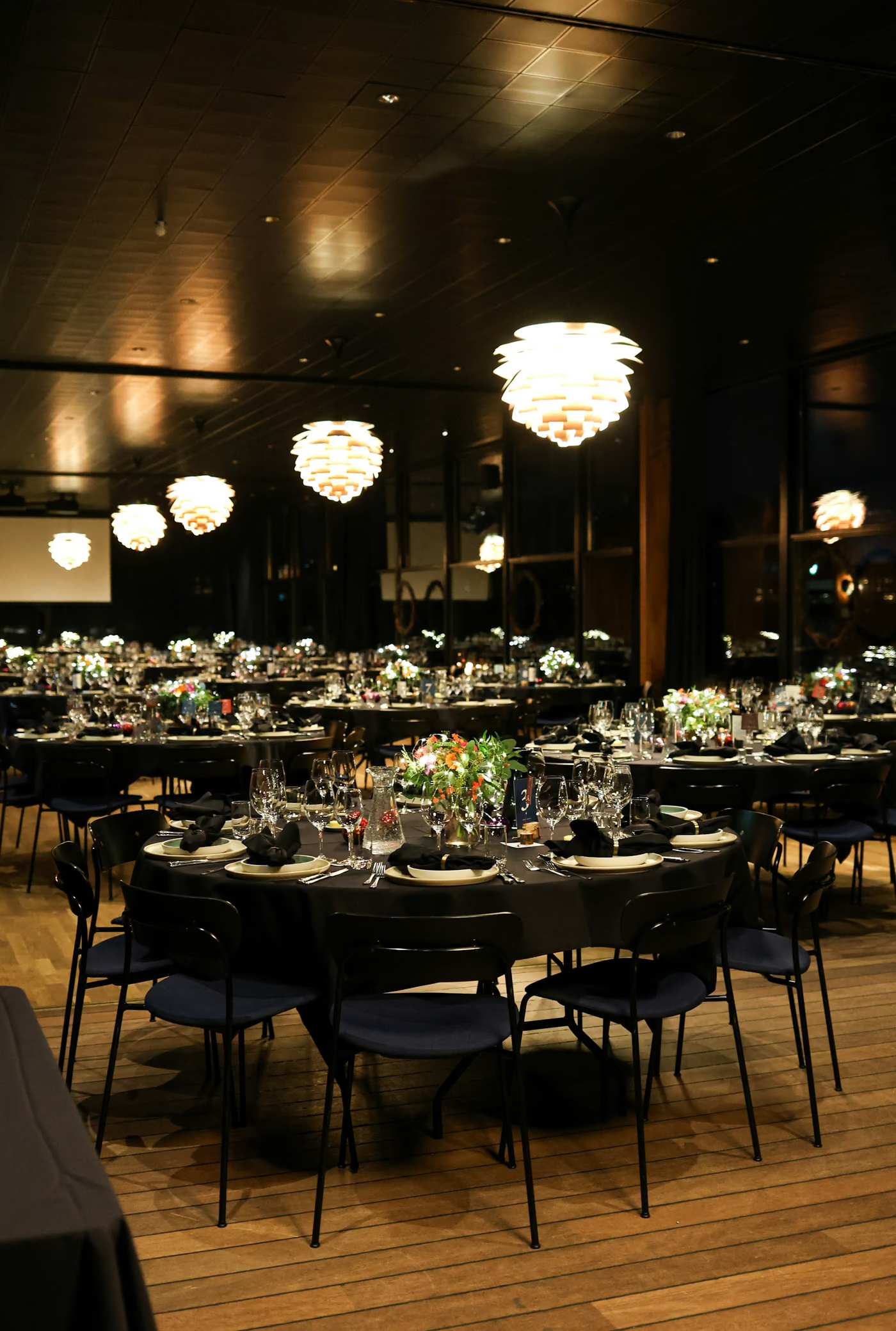
How the Traitors game works
Everyone starts as an ordinary player, except for a few people who draw a different card. They're the traitors. They know who the others are and play together all evening. The faithful only know there are traitors, not how many and not who.
By completing tasks, the group earns money for a shared pot. After each task comes the round table, where everyone votes on who has to leave. And in between, the traitors quietly pick someone to leave the game. So the group keeps getting smaller and the suspicion more and more personal.
- Game hosts, rules, tasks and materials included
- Two or three traitors, chosen in advance and briefed separately
- From around 12 people, for half a day or an evening
- Also as a dinner, with the round table between courses
From the first envelope to the final
The selection
At the start, everyone gets an envelope. A few players read that they're a traitor, the rest are faithful. Nobody is allowed to show their card, and from that moment on the traitors know who each other are.
The tasks
In teams, the faithful play tasks for the prize pot. The traitors join in and try to leave money on the table without anyone noticing. Anyone who makes the wrong choice in a task just once too often stands out.
The round table
After each task, the group gets together. Everyone can say who they suspect, and then each player writes down a name. Whoever gets the most votes has to leave, and only then reveals whether they were a traitor.
The final
At the end of the evening a small group is left. If there are no traitors among them, the faithful share the pot. If a traitor is still left, they take it all.
An evening people will still be talking about weeks later
The Traitors game works best with a group that already knows each other: colleagues, a group of friends or a club. It's exciting precisely because you think you know how someone acts when they're lying. The quiet colleague who suddenly accuses someone with total conviction, the friend who votes along a little too quickly. That's what people talk about afterwards.
We choose the traitors together with the organiser. Ideally people who'll enjoy it and whom the group won't expect. They get a short briefing beforehand, so they don't give themselves away in the first round. If there's anything going on within the group, let us know. Then we'll choose a format where the group plays together against the challenge, such as a team games day.
Is it like the Wie is de Mol game? A little. The big difference is that in the Traitors game someone drops out every round, so the tension builds faster.


At the office, in a hall or during dinner
A round table works anywhere, as long as the group can sit together and there are a few spots where teams can do a task separately. A meeting room with a few side rooms, a restaurant with a private room or an outdoor venue with a marquee. If you're playing it as a dinner, we'll agree the pace with the kitchen. For more formats at the table, see our dinner games.
We're based in Enschede and play all over the Netherlands. We bring the cards, envelopes, props and the game host. If you don't have a venue yet, we're happy to help you think about it.
The price depends on the group size, the duration and the venue. You'll get it after a short enquiry, within 1 working day.
This is AvonturenEvents' own game format, inspired by a well-known TV format. We're not affiliated with the broadcaster, the producer or the rights holder of that format, and only use the name to describe the game principle you can expect.
Frequently asked questions
What's the difference between this and a Wie is de Mol game?
In a Wie is de Mol game there's one saboteur and nobody knows who it is until the reveal at the end. In the Traitors game the traitors do know each other, work together and eliminate someone every round. The group itself votes on who has to leave. That means the conversation turns to each other much sooner, and there's always someone left with the wrong suspicion.
How many traitors are there?
Usually two or three, depending on the group size. With twelve to twenty players, two traitors work well. With larger groups we add one more, or have one of the faithful switch sides halfway through. That last option causes the most discussion at the table.
How many people do you need?
It works from around twelve people. With fewer, someone drops out too quickly and the game is over before it really gets going. Up to about sixty people can all play at the same round table. Above that, we play with several tables and a joint final.
Is this an official version of the television programme?
No. We play our own game format, inspired by a well-known TV format in which traitors and faithful play against each other. We don't have a licence for it and aren't affiliated with the broadcaster or the producer. We write the tasks, rules and storyline ourselves.
Can it be played during a dinner too?
Yes, that's actually the most requested format. Between courses there's a round table where everyone votes, and between the starter and the main course the traitors strike. That way the game runs all evening without getting in the way of the food.
Tell us about your plan
Interested in the Traitors game? Fill in the short form and we'll send a price estimate within 1 working day.
An evening when nobody is sure of the person next to them any more
Tell us how big the group is and where you're playing, and we'll send a proposal with the set-up and price.