An active company outing the whole group joins in
Active means something different to everyone, and that's where it goes wrong. Where participants quietly drop out, which formats do work, and what it costs.
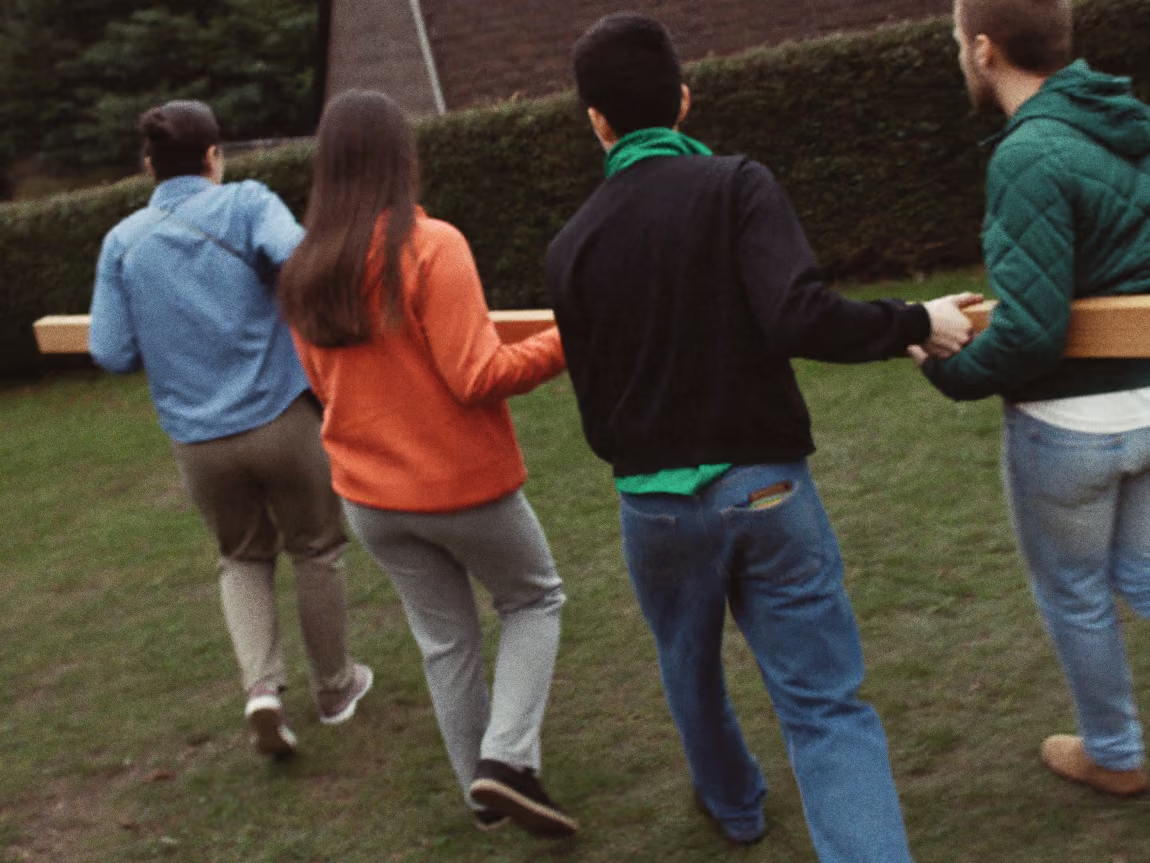
Anyone looking for an active company outing mainly wants to avoid one thing: a day on which everyone sits still and listens politely. Fair enough. But the fix often swings too far the other way, and then you're left with a group where a third are standing at the side watching because it got too sporty. Below is what active should mean in practice, where participants drop out, and which set-up gets the whole group involved.
Active doesn't mean the same to everyone
This is the first source of misunderstanding and it's usually already in the brief. When the management says the outing has to be active, one person means sporty and another only means that there won't be any meetings. That's a big difference.
With the sporty kind of active, it's about effort: running, lifting, speed, competing against each other. With the game-based kind it's about involvement: moving, doing, choosing, solving something together. Both are active. But the first kind costs you the participants who can't, or don't want to, join in physically, and in almost every group that's a substantial share.
It pays to say this out loud beforehand with whoever is paying for the outing. One question is enough: does everyone need to be sweaty afterwards, or does nobody need to have been bored? The answer determines the whole programme.
Where participants drop out
Dropping out is rarely loud. People don't say they're not joining in, they just drift to the side. We see four causes most often.
Fitness differences within the same group
Every team has people who exercise three times a week and people who haven't for ten years. In an element where speed or strength decides who wins, that result is clear within five minutes, and after that there's nothing left to gain for the rest. They still take part, but the day is already over for them.
Injuries and physical limitations
A worn-out knee, a bad back, a pregnancy, a heart condition nobody knows about. These are things people don't like to mention in a group chat. The result is that they call in sick on the day itself, or come along and don't take part. A programme in which a non-physical role is just as valid solves this quietly, without anyone having to explain anything.
Clothing and changing
This is underestimated. As soon as an outing asks for different clothes, showering or dirty shoes, the threshold changes. For some people that's no objection, for others it's exactly the reason to cancel. An active programme in which you can keep your normal clothes on brings in a bigger share of the group.
Competition that gets too sharp
A bit of competition makes an outing. Too much competition turns it into a reckoning, especially if managers are taking part. The tipping point is lower than most organisers think. A scoring system in which the last round can still turn everything around keeps the tension up without the deficit at halfway already being painful.
Three kinds of active, and what they deliver
It helps to distinguish three ways in which an outing can be active. Most good programmes combine two of them.
- Physically active: the group moves and exerts itself. Delivers energy and a clear result. Risk: it excludes people.
- Game-based active: the group does something, chooses, builds, aims, plays against each other, but effort isn't the deciding factor. Delivers the broadest participation.
- Mentally active: the group solves something together under time pressure. Delivers the most teamwork and the most conversation afterwards, but without a physical element it quickly feels like work.
The combination that works best in practice is game-based with a physical edge. People move, people laugh, and nobody drops out because they can't run fast.
Formats that work in practice
A team games day with your own elements
The classic answer when someone asks for an active outing, and it still works, provided the elements differ in what they demand. One element on speed, one on precision, one on discussion, one on luck. Then the lead shifts through the day and every team stays in the race. See how we build a custom team games day.
A city game or a route through the area
Teams set off with tasks they come across along the way. Active in the sense that there's walking and doing the whole time, but they set the pace themselves. That makes it suitable for mixed groups, and it gets more conversation going along the way than a programme in one place. See custom city game.
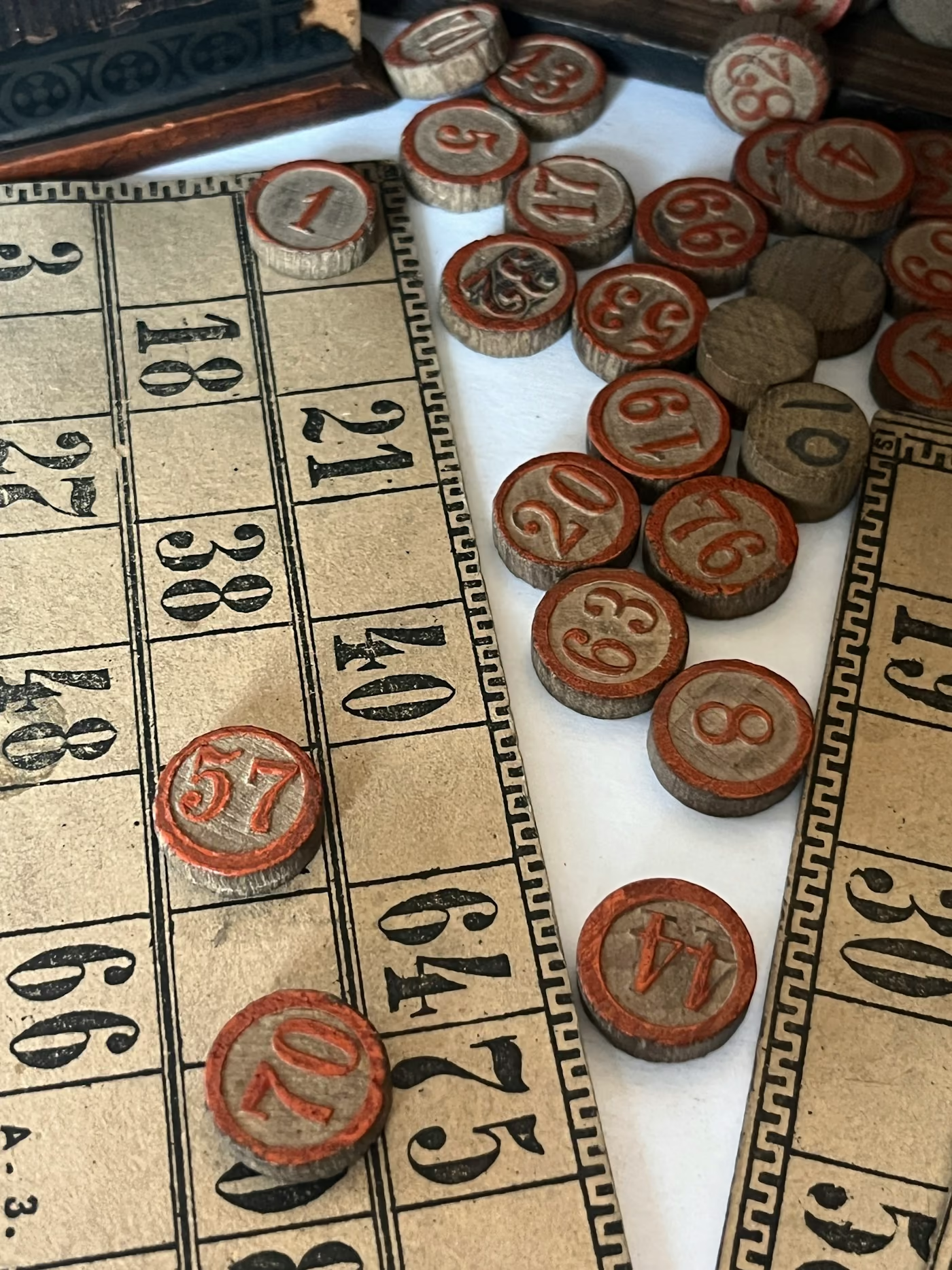
Traditional Dutch games
Underrated as a company outing, because it sounds like something for a street fair. What it does in practice is exactly what you want: everyone can do it straight away, nobody needs to get changed, and the result depends more on luck than on fitness. See traditional Dutch games.
Archery tag
For groups that really do want something physical. Strong because aiming matters more than speed, so the result is less predictable than in most team sports. It does need space and different clothing, though, so check that with the group beforehand. See archery tag.
Life-size board games
Familiar games at full size, with the participants as the pieces. There's walking and discussion, but tactics are the core. It works well for groups with big differences in fitness, and indoors too. See life-size board games.
How long should an active outing last
Shorter than most organisers plan. An active programme that lasts longer than three hours loses its energy, even with a group that's enjoying itself. People don't complain. The pace just drops, and the last elements feel tacked on.
For half a day, one and a half to two and a half hours of active programme works, with a break in it. For a full day, a set-up with two shorter blocks works better than one long block: a block in the morning, lunch, a block in the afternoon. That also gives the less fit people a chance to recover in between without anyone noticing.
Deliberately plan something calm at the end. Drinks, a prize-giving, something where people sit down. That's where the conversation happens that makes the day stick, and without that moment everyone heads to the car and it's gone.
Dividing people into teams: the detail that matters most
At an active outing with teams, the most important decision isn't about the elements but about how you divide the teams. If you let people choose themselves, you get the existing groups back and nothing changes in the relationships. If you allocate, you can steer.
What works well in practice is splitting people on something neutral that happens to produce a mix: birth month, first letter of their first name, or simply a list drawn up beforehand with no explanation. As soon as you say out loud that you're mixing people to break up departments, it provokes resistance. Without an explanation, nobody notices.
Keep teams small. Four to six people is the upper limit at which everyone still has something to do. In a team of ten there are always three watching, and those are exactly the people you wanted to keep involved.
Outdoors, indoors, and the weather
An active outing is usually planned outdoors, and in the Netherlands that's a gamble. The mistake made most often isn't that there's no plan B, but that plan B is only thought up on the morning itself. Then it becomes a gathering in a hall that nobody came for.
It's better to agree an indoor option beforehand that works with the same group and the same time slot, and then confirm or drop it two days before. That way everyone knows where they stand, and the indoor option is a proper programme rather than an emergency measure. See also indoor activities for groups.
A second consideration is the time of year. Between November and March, outdoor activity is short and cold, and an indoor programme almost always wins. Between April and October outdoors works fine, as long as there's somewhere to shelter.
What the venue needs
For an active outing the venue rarely needs to be special. A car park, a lawn behind the building, a local club's sports field or a stretch of company grounds is usually enough. What it does need is this.
- Enough flat space: count on roughly 10 to 15 square metres per participant for a programme with several elements running side by side.
- Power nearby: for sound and for the scoring. With larger groups, sound isn't a luxury: without amplification half the group can't hear the instructions, and that costs more time than setting it up.
- Somewhere to shelter: not just from rain, but for shade too. A group that's stood in full sun for two hours has dropped out by the end just like a wet group.
- Toilets and water: sounds obvious, but is regularly forgotten at an outing in a field.
- A place for bags and coats: as soon as people have to keep an eye on their things, they join in less.
We visit beforehand or ask for photos to assess whether a place works, because that saves the most improvisation on the day itself. If the group has no suitable place of its own, we'll arrange one that fits the group size and the programme.
What an active company outing costs
For the programme that we provide, these guide prices apply:
- From €195 for a compact half-day programme for the whole group.
- Between €550 and €1,250 for a more extensive custom programme, with several elements and content written for your company.
- From €1,250 for large groups or a full day with several blocks.
Venue, food and drink are on top of that. For an active outing on your own company grounds or a place you already rent, those costs largely disappear, and that often makes more difference than the choice between two programmes.
What mainly sets the price is the degree of customisation and the number of elements, not the group size. A team games day with fifty participants and standard elements costs less than a programme for twenty people in which the tasks are about their own work.
Checklist before you book
- Do you know which meaning of active is intended? Sporty, or simply not sitting still. Check with whoever makes the decision.
- Do you know who can't take part? Ask anonymously, or choose a programme where it doesn't matter.
- Do people need to change? If so, is there somewhere to do it and has everyone been told?
- Is the indoor option fixed? Is it agreed, with a decision point?
- Can the outcome still swing right up to the end? If not, half the group drops out halfway.
- Is there room to talk afterwards? The conversation afterwards is what makes the outing stick.
What you get from this
An active company outing is a success if the whole group took part, not if the fittest half enjoyed it. That calls for elements in which different kinds of people can score, clothing you can simply keep walking around in, and a scoring system nobody writes off halfway.
We build programmes like this to your brief and also run them ourselves on the day, at your venue or at a place we arrange. Have a look at the page on company outings in Twente or the overview for companies. Or tell us how big the group is and what should and shouldn't be possible, and we'll send you a proposal.
Frequently asked questions
What exactly is an active company outing?
In practice it can mean two things. Some people mean sporty: running, climbing, playing against each other. Others only mean that the group doesn't sit still all day. That difference is big enough to settle in advance, because a programme built for the first meaning costs you half the participants if the group had the second in mind.
How do you keep an active outing fun for people who aren't fit?
Choose elements where speed or strength doesn't decide who wins. As soon as a team can also score points through thinking, aiming, discussing or luck, everyone joins in. With elements where the strongest always wins, the rest are watching within ten minutes.
What do you do if it rains at an active company outing?
Agree it in advance, don't decide on the day. Agree an indoor option with the provider that works with the same group and the same time slot. That sometimes means a different programme, but one that goes ahead. Two days before, we make the call together.
From how many people is an active outing worthwhile?
From about ten people the dynamic of teams competing starts to build. Below that number it can still work, but a set-up in which the group plays together against a challenge works better than one in which they play against each other. There's hardly an upper limit, though you need more hosts.
What does an active company outing cost?
A compact half-day programme starts at €195 for the group. A more extensive custom programme, with several elements and its own content, is between €550 and €1,250. For large groups or a whole day, expect to pay from €1,250. Venue and catering are on top of that.
Ready to get started on your event?
We design a programme that fits your group and run it from start to finish. Book an introductory chat with no obligation, not a sales pitch.
Plan an introduction