How to draw visitors to your exhibition stand
A full aisle, visitors in a hurry, and you want them to stop at your stand in particular. Nine tactics that work in practice at Dutch B2B trade shows.
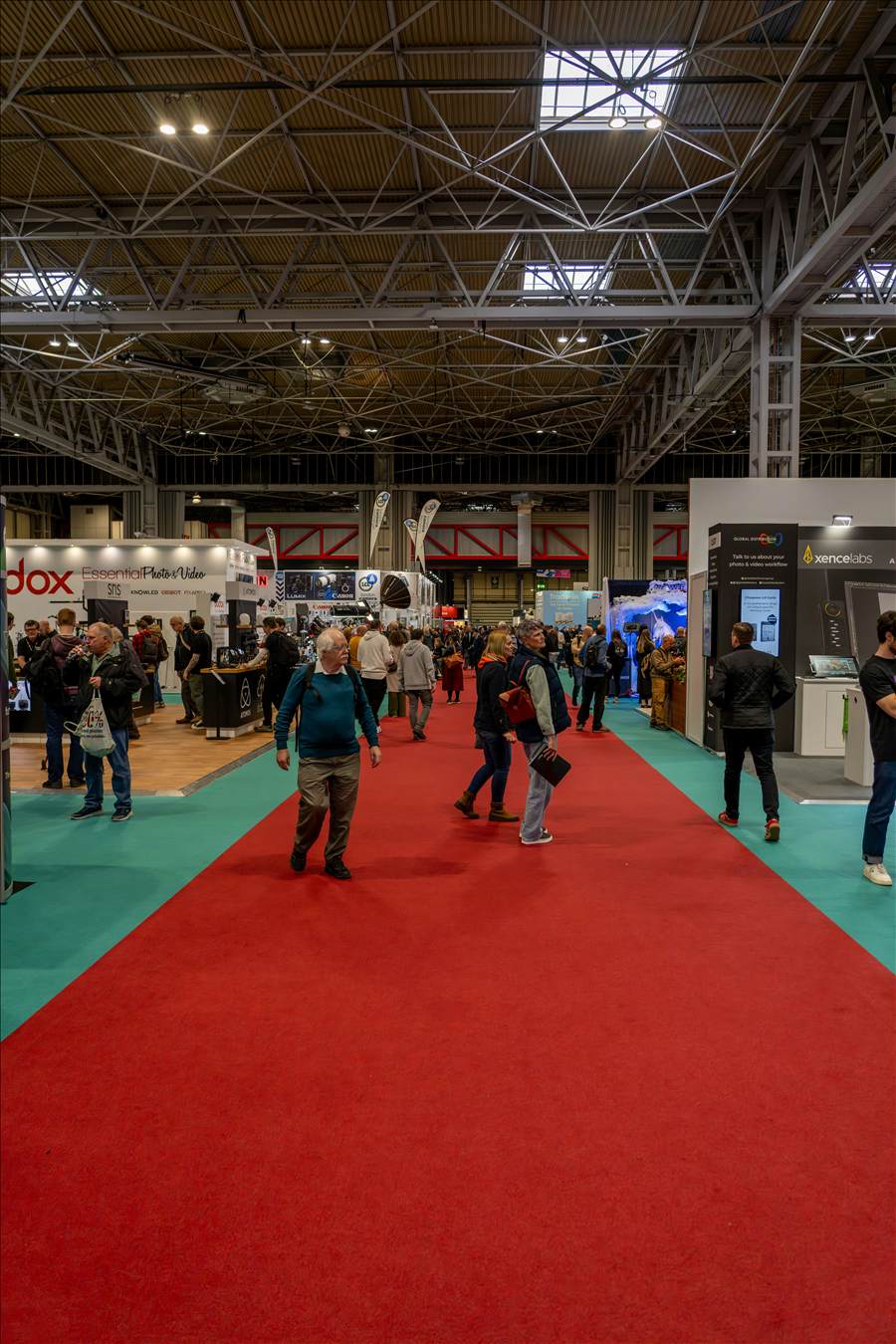
A full aisle, visitors in a hurry, and you want them to stop at your stand in particular. At the average B2B trade show, around eighty per cent of the audience walks past your stand without really looking. That's not bad luck, that's what happens when a stand gives no reason to stop. Below are nine approaches that work in practice, based on what we see on exhibition floors in the Netherlands.
1. Give visitors a concrete reason to walk in
"Welcome to our stand" is not a reason. A free coffee is nice but mostly attracts coffee drinkers, not leads. What does work: something that makes it clear within three seconds why a visitor should stop.
Examples that draw people in practice:
- A live demo of the product, not a closed screen with a looping video
- A toy or game where the prize or result is visible
- A provocative question on a big board, for example: "How many hours does your team waste on manual reporting?"
- A visual statement that stands out from the standard look of neighbouring stands (colour, shape, height)
The trick is in the perspective. Put the value first, not the presence of your company. Visitors are looking for solutions, not logos.
2. Make your entrance readable from five metres
Visitors decide in fractions of a second whether to stop. Nobody scans a stand full of small text, abbreviations or industry jargon. What to do instead:
- One key sentence in very large letters, at least thirty centimetres high
- A maximum of five words, not a full sentence
- Directly answers the question: "What do you do for me?"
- A colour that contrasts with the wall behind it
"Smart software platform for SMEs" works better than "Enterprise-grade SaaS solutions for mid-sized businesses". Shorter, clearer, and your audience has taken in your message before they've consciously read it.
3. Add an interactive element
Stands where people do something demonstrably work better than stands where people look at something. It doesn't have to be a circus. A tablet with a short quiz, a physical interaction such as a push button or slider, a large screen visitors can steer something on: the difference is that the visitor becomes active instead of passive.
What works best in practice:
- Quizzes that can be played in sixty to ninety seconds
- A tangible result, such as a score, personal advice or a certificate
- A visual outcome that other visitors on the stand can see too
- A multiplayer element in which two visitors play against each other
That last one matters most. People see someone playing and want to know what it is. That way one visitor attracts more visitors, without you having to shout.
What does an interactive element like that cost?
At large event agencies, a custom game installation quickly runs to €5,000 to €15,000 for a simple set-up. That price is full of overhead: project managers, account managers, and often a subcontractor who does the actual work. We work without those extra layers: a compact concept starts at €195, and a fully branded game experience costs between €550 and €1,250.
For the full range of options, the event agency page is the place to go. It also has guide prices and the process from briefing to show day.
4. Reward the effort with something concrete
A lead form with nothing in return almost never works. A good reward isn't a pen or a mouse mat (they get those twelve times a day), but something of direct value for their work.
What does work:
- A personal benchmark report based on the quiz they played
- A whitepaper emailed straight after they fill in the form
- A discount or priority on a free pilot or demo programme
- A personalised advice report ("based on your answers, I'd look at X")
The key is personalisation. A generic report is dead paper. A report that says "your company scores 6.2 on X, the sector average is 7.4" is a conversation.
5. Use your social network beforehand
The biggest mistake at trade shows is waiting for visitors to come by themselves. In the week before the show, your target audience has already made a mental list of stands they want to visit. If you're not on it, you'll have to rely on chance passers-by.
Concrete actions for the two weeks before the show:
- A LinkedIn post from each team member who will be there ("I'll be at stand 234, drop by if...")
- A personal email to your top fifty prospects, with an appointment link
- A short teaser of the demo or game you'll be showing there
- Direct messages to industry contacts instead of a mass mailing
- A simple landing page with the time and stand location where visitors can sign up
Trade shows are won in the preparation, not on the day itself. If you only start the week before, you'll mostly end up talking to passers-by.
6. Train stand staff to connect, not pitch
Anyone on the stand needs to be able to do one thing: judge within thirty seconds whether a visitor is interesting, and then steer the conversation in the right direction. Nobody wants a product presentation within ten seconds. What works is an open question, not a pitch.
Good openers:
- "What brings you to this show?"
- "Have you discovered anything today that surprised you?"
- "Do you work at a company where X is an issue?"
Bad openers, which you're better off avoiding:
- "We do X"
- "Can I tell you something about Y?"
- "Are you interested in a demo?"
Building a conversation takes effort. But one good five-minute conversation delivers more than ten superficial hellos.
7. Measure what works, and stop what doesn't
On day one of the show you can already see what draws people and what doesn't. Arranging the stand differently, trying another promo board, adjusting the game text: these are all changes you can make within an hour.
What you should track in any case:
- The number of people who stop versus the number who walk on (counting for ten minutes per hour is enough)
- How many of them start a conversation
- How many of them leave a lead
- Which question or hook works best for stopping visitors
- Time spent per type of visitor (how much time do you give a less qualified lead?)
At the end of day one you know what to steer the stand towards for day two. At the end of the show you know what to do differently next time.
8. Plan for light and sound deliberately
Many exhibitors only see their stand during the day at the office and on the exhibition floor. But the light changes through the day, and the sound from neighbouring stands mixes with yours. A few practical things you'll notice on the floor straight away:
- Test the stand with the exhibition hall lighting on, not only with your own lighting
- Don't place screens directly under a hall spotlight, otherwise everything is washed out and unreadable
- Use directional speakers per zone (touchscreen, demo table) instead of one general source
- Test your stand's sound with your neighbours' mix of serving and talking in mind
9. Make something that gets shared
Social shareability is an underrated lever. An eye-catching photo opportunity, a live leaderboard with names, a personal certificate that looks good: these are reasons for visitors to take a photo and share it. And a shared photo automatically reaches their network, including colleagues who aren't at the show.
What works in practice:
- A hashtag or stand location people can tag, simply put on a slip of paper
- A visual outcome (such as a personal score card) that's worth a screenshot
- A physical installation people like to pose in front of
Top mistakes exhibitors make
For completeness, five mistakes we see again and again, all of which can be fixed straight away.
- Too much text on the stand: people don't read on an exhibition floor. A maximum of five words in the main message, with all the explanation saved for the conversation.
- Stand staff chatting among themselves: a group of three chatting colleagues intimidates visitors and signals: there's no room for me here. No more than two people talking to each other at a time.
- No plan for the leads after the show: if you only follow up leads after a week, you've already lost half of them to forgetfulness or competitors. Plan your follow-up within 48 hours.
- No distinction between buying visitors and browsing visitors: both are valuable, but they deserve a different approach.
- A cheap giveaway as the main draw: a mouse mat brings 80 per cent quantity and 20 per cent quality. A good hook does the opposite.
What you get from this
Not all nine points are equally relevant to every company. For a software company, everything revolves around the demo. For a service provider, the conversation is the lever. The common thread: visitors don't stop for what you want to tell them, but for what gives them something. Start there.
Want to talk through how to approach this at your own trade show? See what we build on the event agency page, or arrange an introductory meeting with no obligation.
Frequently asked questions
How many visitors normally stop at an average B2B exhibition stand?
Industry research shows that around 5 to 15 per cent of passing visitors stop at the average B2B stand. Stands with an interactive element average 20 to 35 per cent. The difference mostly comes down to visibility and a reason to stop.
What does an interactive element on an exhibition stand cost?
At specialist agencies, rates quickly add up to €5,000 to €15,000 for a simple set-up. At AvonturenEvents we start at €195 for a compact concept, and charge between €550 and €1,250 for a fully branded experience.
How far in advance should you start preparing?
For a strong interactive concept, allow at least four to six weeks from the first conversation to the build. A compact concept can be done within two weeks, provided the briefing process moves quickly.
Do you need your own stand staff alongside the interactive element?
Yes. The interaction draws visitors in, but the conversation that follows is what converts. Stand staff without an interactive element bring in fewer leads, and an interactive element without staff doesn't produce any follow-up.
Does an interactive stand also work at smaller trade shows?
With fewer than 800 visitors a day or a stand smaller than six square metres, it becomes hard to earn back the investment. For smaller shows, a simple tablet quiz often works better than a large installation.
How many leads can you realistically expect in one day at a trade show?
For an average B2B stand with an interactive element, the range is between 40 and 100 qualified leads per day, depending on the number of visitors and how tightly the lead flow is set up. Without an interactive element, the average is 10 to 30.
More leads from your next trade show?
We build stand concepts that make visitors stop and capture their details. Tell us which show you're exhibiting at and we'll help think through the set-up.
View trade show activations