Lead generation at trade shows: from scan to appointment
A stack of business cards is not lead generation. How to get from scan to appointment at a trade show, with the seven steps and conversion benchmarks for B2B in the Netherlands.
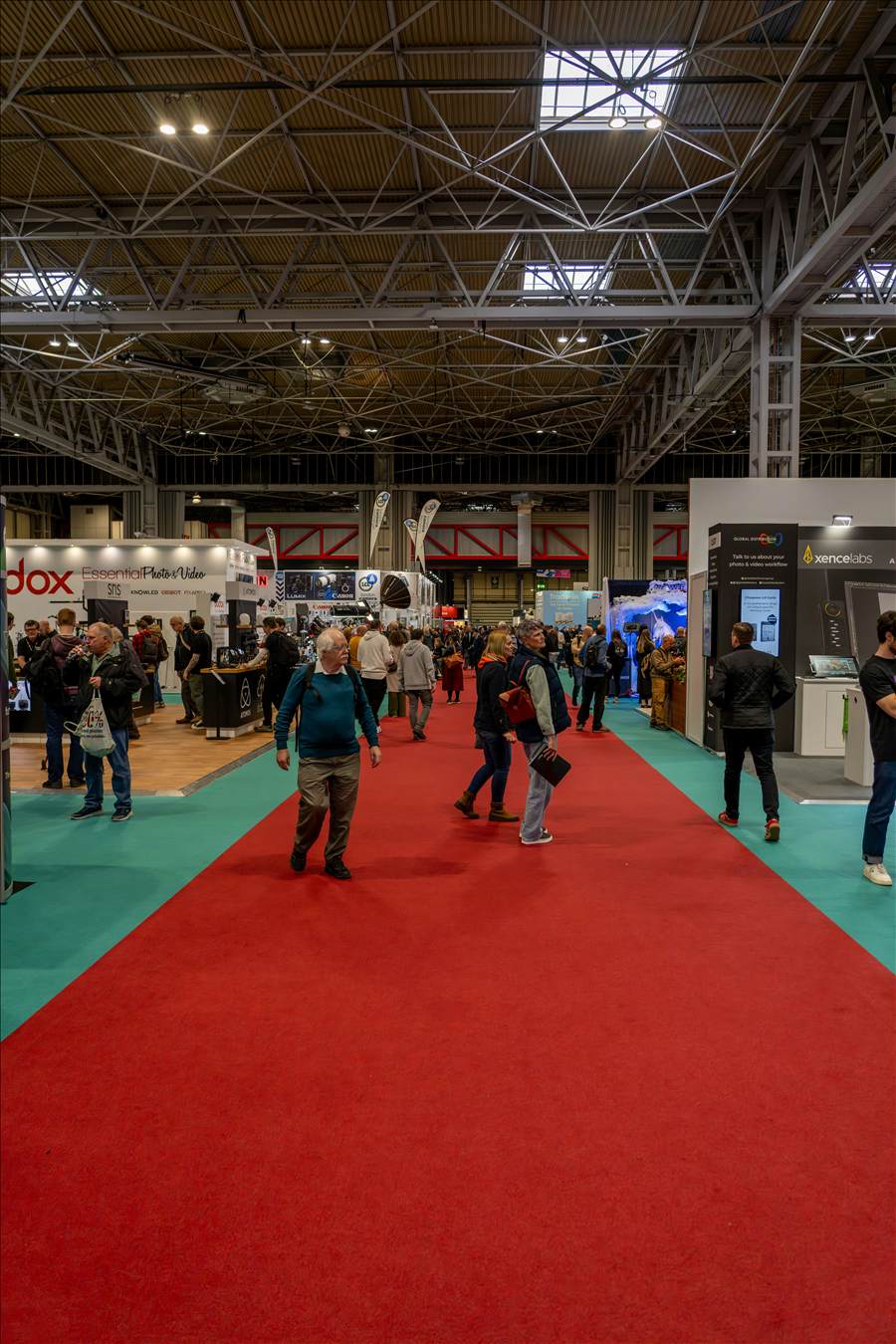
A stack of business cards isn't lead generation. And a handheld scanner that scans hundreds of badges a day makes a nice report for the CMO, but delivers nothing concrete for the sales team. How do you turn a trade show appearance into a genuine lead machine, and what does the step-by-step flow from scan to appointment look like? Below are the seven steps that work in practice at Dutch B2B trade shows, with conversion benchmarks.
What is a good lead at a trade show?
The definition of a "lead" varies enormously between companies, and that's often where the first problem lies. What marketing hands over as a lead, sales is binning three weeks later. A workable definition:
- Identifiable: full name, valid email address, company name
- Relevant to the role: their job or field of work matches your ideal customer profile
- Informed: the person knows what you do, not just that you exist
- Timely: there's an urgency or a moment within the next three to twelve months
A lead that doesn't meet three of the four is a name in a database, not a sales opportunity. Agree this definition with your sales team beforehand, which prevents disagreement afterwards.
The seven steps from scan to appointment
Step 1: Give a reason to leave their details
Visitors don't just leave their details. A good hook has direct value for them, not only for you.
What works:
- A personal benchmark report ("how your team scores against the sector")
- A whitepaper or guide they wouldn't normally find through Google
- Priority access or a discount on a free pilot or demo
- Personalised advice based on a short quiz
What doesn't work: pens, USB sticks, or "sign up for our newsletter".
Step 2: Capture the data as easily as possible
Every extra form field lowers conversion by roughly ten per cent. Ask for the minimum you need to follow up the lead. Name, email, company, and possibly one qualifying question. You get the rest from LinkedIn after the show.
A tablet form that takes thirty seconds to fill in demonstrably converts better than a long form or a handheld scanner with no conversation.
Step 3: Judge the quality of the conversation
Not every lead carries the same weight. During or straight after the conversation at the stand, you want to know:
- Is this the right person (decision maker, influencer, user)?
- How urgent is their need (now, this quarter, next year)?
- Do they already have a solution in mind?
A simple classification works best: hot (get in touch within 2 weeks), warm (a personal email within 2 weeks), cold (into a general nurture flow). Make sure the stand staff can make and record this classification on the spot.
Step 4: Instant automatic confirmation
Within five minutes of filling in the form, the visitor gets a personalised email. Not just "thanks for your interest", but also the promised report, whitepaper or advice. This does two things:
- The visitor immediately associates your brand with fast service
- The email arrives before they've left the exhibition floor, which makes it highly effective
With us, this flow is a standard part of the system. With many SaaS lead platforms, there's often an extra day's delay or you have to set it up separately.
Step 5: Lead scoring and CRM integration
Before the show day is over, you want the hot leads to be in the sales manager's CRM already. Not in an Excel file that gets uploaded on Monday. For B2B, this means a direct API integration with your CRM (HubSpot, Pipedrive, Salesforce) with the right tags and properties.
Agencies often charge €500 to €2,000 as a separate item for a CRM integration like this. We build it into the lead flow as standard, at no extra cost.
Step 6: Follow up within forty-eight hours
Hot leads get a personal email within one day from the sales colleague who spoke to them at the stand. Not a template email, a real email that refers to what was discussed. That's where the difference lies.
What works in the first follow-up:
- Refer to something from the conversation ("you mentioned that you have problem X")
- Suggest one concrete next step ("shall we spend half an hour brainstorming next week?")
- Keep it short, three to five sentences
- Send it on a working day, not at the weekend
Step 7: Measure, learn, adjust
An evaluation after every show. Not "how many leads do we have" but: how many leads are warm, how many have produced an appointment, how many are in the sales pipeline three months later. Those are the numbers that really show the ROI of taking part in a trade show.
What to include in the evaluation:
- Conversion per phase (from scan to appointment to pipeline)
- Which type of visitor had the highest conversion
- Which question or hook worked best
- What the cost per qualified lead was
Conversion benchmarks for Dutch B2B trade shows
Realistic percentages based on what we saw at medium-sized and large Dutch B2B trade shows in 2024 and 2025:
- Passers-by who stop at a stand without an interactive element: five to fifteen per cent
- Passers-by who stop at a stand with a good interactive element: twenty to thirty-five per cent
- Conversation-to-lead conversion without a clear flow: ten to twenty per cent
- Conversation-to-lead conversion with a good flow: forty-five to seventy per cent
- Lead-to-sales-appointment conversion with follow-up within 48 hours: twenty-five to thirty-five per cent
- Lead-to-sales-appointment conversion with follow-up after a week: ten to fifteen per cent
What a lead capture system normally costs
Market prices for 2026 in the Netherlands:
- Simple SaaS scanner platform with basic reporting: €500 to €1,250 per show (subscription)
- Advanced platform with quiz functionality and CRM integration: €2,000 to €5,000 per show
- Custom lead flow via an event agency with a game element: €5,000 to €15,000
- Full-service solution with installation, software and staffing: €15,000 to €35,000
Why you pay far less with us
We build the whole lead flow ourselves in our own tech stack. Concept, software, CRM integration, email automation, all in-house. That means a fully integrated quiz-to-CRM flow with a personal result for the visitor and instant sales notification, from €1,250 all-in. With an event agency you'd pay at least €5,000 to €10,000 for the same.
A simple set-up with a tablet form, email confirmation and lead export starts at €195, even when the budget is tight. See the full range of options on the business page.
Three common lead mistakes at trade shows
The three mistakes we see time and again:
- Scanning everyone "just in case": hundreds of unqualified leads in your CRM isn't a success, it's a follow-up problem for sales.
- Following up only a week after the show: half the motivation has gone by then. Anyone who follows up 48 hours after the last day of the show doubles their conversion.
- No distinction between lead types: a hot lead who gets the same nurture email as a cold lead ends up irritated instead of enthusiastic. Set up different flows.
What you get from this
Lead generation at trade shows isn't a matter of scanning as many badges as possible. It's a designed flow in which every step, from hook to follow-up, has been thought through. Anyone who sets up that flow well gets three to five times more return from the same trade show investment.
Are you working on a better lead flow for your next show? See the options on the business page, or arrange an introductory meeting with no obligation.
Frequently asked questions
What is a good lead conversion rate at a Dutch B2B trade show?
For an average stand with no interactive component, the share of visitors who leave a lead is between three and seven per cent of those who stop. With a good interactive flow, that rises to fifteen to thirty per cent. The conversion from lead to an actual sales call averages twenty to thirty-five per cent if the follow-up is quick.
How quickly should I follow up leads after a trade show?
Within forty-eight hours of the last day of the show. After a week, half the leads have disappeared under a pile of emails, and after two weeks the motivation has completely gone. The first touch doesn't have to be a sales pitch; a simple "nice to have met you, I'm sending that report over" often works best.
What does a lead capture system for a trade show cost?
A professional SaaS platform with a scan function costs an average of €500 to €1,250 per show in the Netherlands (subscription plus set-up). We build a simple tablet form plus CRM integration from €195. We build a fully integrated quiz-to-CRM flow from €1,250 all-in.
What is the minimum information needed to make a lead usable?
Four fields: name, email, company, and a qualifying question from which you can infer interest. Try not to ask for a phone number (it lowers conversion considerably), or for a job title if you can get that from LinkedIn later. A shorter form converts better.
Is a handheld scanner or a tablet form better?
A handheld scanner is faster but yields lower-quality leads, because it's too easy to scan a badge without a real conversation. A tablet form takes a little more time but demonstrably produces better leads, because the visitor consciously chooses to leave their data. For B2B, a tablet form is almost always the better choice.
More leads from your next trade show?
We build stand concepts that make visitors stop and capture their details. Tell us which show you're exhibiting at and we'll help think through the set-up.
View trade show activations