Exhibition stand ideas: twelve examples that start conversations
A beautiful stand with no interaction gets glances and no conversations. Twelve ideas, examples by industry, a checklist and what goes wrong in practice.
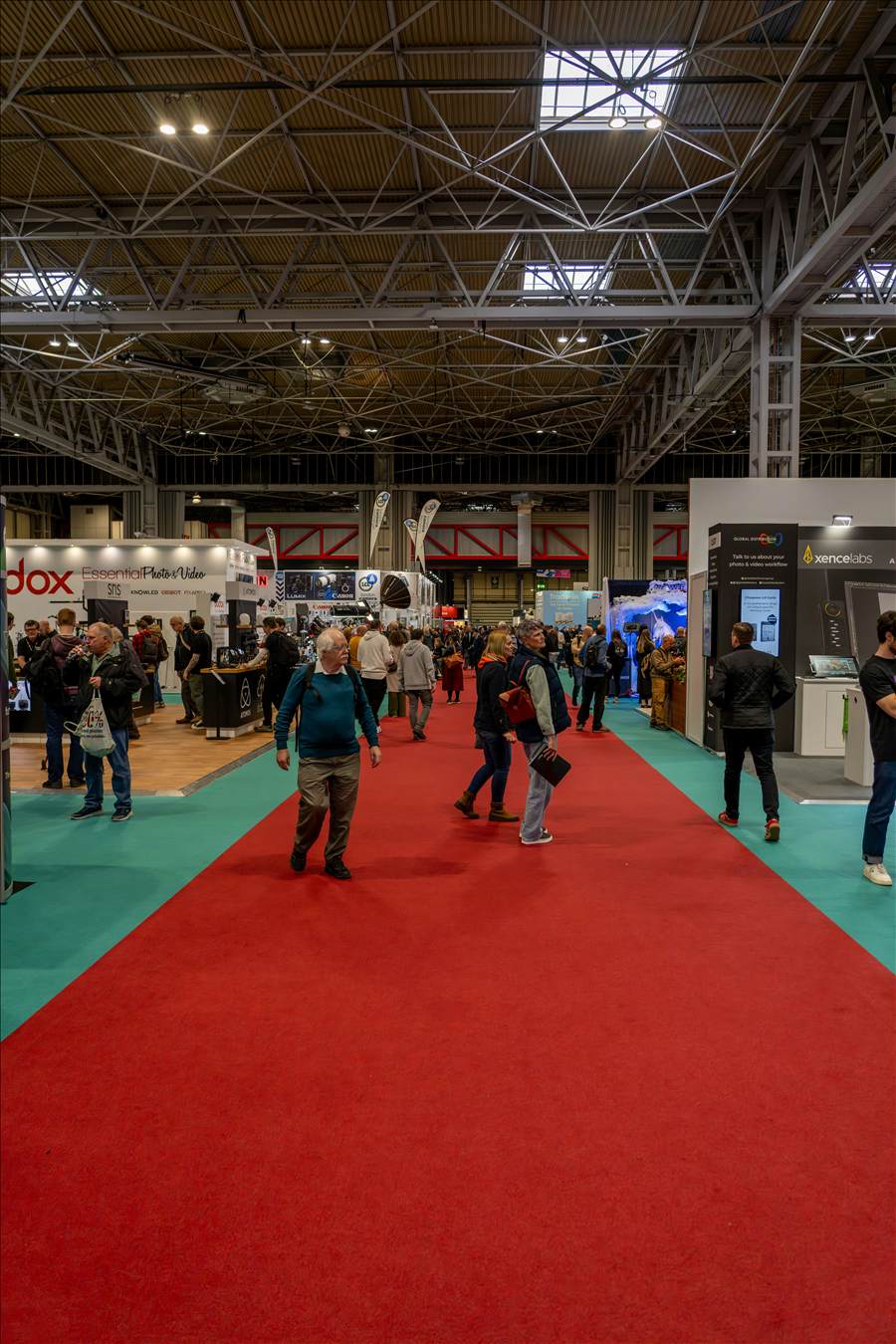
Most exhibition stand ideas you find are about standing out: brighter colours, a bigger screen, a taller banner. That's one layer. The layer underneath is about what a visitor does in your stand, and that determines whether a conversation starts. Below are ideas for filling your stand, ordered by what they deliver. There are separate articles on attracting visitors and on budget: attracting visitors to your stand and what an interactive stand costs.
Twelve exhibition stand ideas at a glance
First the list, then the background. Each idea below gives the visitor something to do, and that's what sets a stand apart from a picture.
- A quiz about the problem you solve. Three to five questions on a tablet, the result straight on the screen. Anyone who takes part has already given your colleague an opening line.
- A scoreboard for the day. A short skill game with the best scores visible on a screen. People come back to defend their spot and bring colleagues.
- A twenty-second demo. At the edge of the stand, standing up, with a longer version only for those who ask for it.
- A scan or calculator. The visitor fills in five details and immediately sees what it means for them, for example a saving or a comparison with the sector.
- A wall of statements. Visitors put a magnet on agree or disagree. Your colleague has a question to start with that doesn't sound like selling.
- The product in miniature. A scale model, a material sample or a component people can pick up and turn over.
- A guess with a prize. Guess the weight, the number or the lead time. The winner is announced after the show, so participants leave their details.
- A photo moment that's about your trade. Not a standard photo wall, but a backdrop that has something to do with your product.
- A contest between companies. Visitors play for their employer, and the running score per company is on a screen. Colleagues from the same organisation come to fetch each other.
- Coffee with a question. Good coffee makes people stop. Use the minute the machine runs for one question about their work.
- A counter that tracks the day. The number of participants, the total of all scores or the number of litres your machine has processed today. A number that climbs gives the stand movement.
- A wheel with questions. A digital wheel of fortune whose segments are topics from your field. The wheel picks the topic, your colleague asks the question.
Start with the action, not the design
A stand concept starts with the action you want a visitor to take. Write that action down in one sentence, with a verb in it. Once that's there, the rest of the stand follows: where the table goes, where the screen hangs, where people wait and where your colleague has room to join in.
Examples of such a sentence: the visitor answers three questions about their own situation, the visitor tries our machine in miniature, the visitor chooses between two options and sees the consequence. What they have in common is that the visitor does something they get something out of themselves, not something you get something out of.
If you can't write that sentence down, that's the real problem and not the design. A stand where visitors can't do anything gets looked at and walked past, however good it looks.
Four kinds of content and what they deliver
There are roughly four kinds of content for a stand, and they deliver different things. The choice depends on what you sell and to whom.
The demo
A demo works if your product visibly does something and it can be shown within two minutes. Software, machines, materials with a striking property: all suitable. The pitfall is length. A ten-minute demo isn't a demo but a presentation, and it misses most of your audience, because people won't sit down for something they know nothing about yet.
What helps: cut the demo into a twenty-second version and a five-minute version. You do the short one standing at the edge of the stand, the long one only for those who ask. That way you use the first as a filter for the second.
The game
A game works if your product itself isn't visible or can't be shown in two minutes. Services, insurance, advice, complex technology: there's little to demonstrate there, and then a game is the way to make the subject tangible after all.
The requirement is that the game is about the subject. A game that only has your logo on it is a prize draw, and it attracts people who want a prize. If the game is about the problem you solve, you're already in the conversation you wanted halfway through the game. We build this kind of set-up as a trade show game, and the broader approach around it is on the page about trade show activation.
The measurement or test
A test works if your visitor finds out something about themselves. A short scan, a calculation, a comparison with an industry average. That's attractive because the result is about them and not about you.
Practical point: keep it under ten questions and show the result on the stand straight away. A test whose result comes later by email is a form with extra steps. Visitors notice that, and then they drop out halfway.
The conversation with a hook
Sometimes the best content isn't a set-up but a good reason to start. A statement on the wall that visitors put a magnet against, a question people write their answer to on a card, a list of something you can't agree on.
This is the cheapest form and it's underrated. A wall with a statement where visitors visibly take a position gives your colleague an opening line that doesn't sound like selling, and that's exactly the threshold where most stand conversations stall.
Examples by type of company
The same four kinds of content look different per sector. A few examples as a starting point:
- Software company. A one-minute task in your own software, with a scoreboard. Whoever is fastest wins. That way the visitor sees the product without a demo.
- Installer or technical company. Guess how much energy an appliance uses, and see on the screen what the alternative saves. The conversation then naturally turns to their own situation.
- Adviser or service provider. A ten-question scan with a score you compare with the sector. The result is on the screen straight away, the advice follows in the conversation.
- Food products. A blind tasting with a voting card. Visitors taste two variants and choose, the running total hangs on the stand.
- Employer at a jobs fair. A game about the job, with a scoreboard. The best players are invited for an introduction.
Ideas for a small stand
On nine to twelve square metres you pick one thing and do it well. That's the most important decision with a small stand, and most exhibitors don't make it.
What works at this size: a single set-up on the open side, with the rest of the stand as backdrop. What doesn't work is a table straight across the opening, because then you're literally standing in the way of the action you want to trigger. Put the table at the side or leave it out.
With a small stand, waiting space counts double. If two people are busy and three are watching, your stand is full and that's good. But those five people have to fit within your square metres, otherwise they're standing in the aisle and the organisers won't thank you for that.
What do you do with the back wall?
The back wall should say what you do, in seven words at most, legible from about five metres. Not your slogan, not your whole range of services, and not just your logo.
The logo is usually there already and says little to someone who doesn't know you. The sentence underneath does the work. Someone walking down the aisle decides in about two seconds whether your stand has anything to do with their problem, and that decision is made on text, not on design.
Practical tip: test that sentence by having someone outside your field read it and asking what the company does. If they can't repeat it, the sentence is too vague. It costs you five minutes and it's the cheapest improvement to your stand.
Which giveaways actually pay off?
A giveaway pays off if you tie it to the action rather than to the passer-by. Handed out loose, it disappears into the bag with all the others.
Three ways to make that link. Give something only after taking part, so it becomes a memento of something they did. Give something that's only usable with what you sell, so it keeps reminding them of the subject. Or give something that stays on the desk at the office instead of in the bag, because then it's still in sight three weeks later.
What almost never works are pens and sweets. Not because people don't take them, they do, but because taking and remembering are two different things. A bag full of pens produces no conversations at all.
Ideas that sound good on paper and don't work on the floor
A few concepts keep coming up in brainstorms and disappoint on the exhibition floor. It's useful to know why, because then you can sometimes still make them work.
- A big screen with a film: visitors don't stop for moving pictures without sound, and sound is usually not allowed to be loud enough. Does work if the screen shows the outcome of an action instead of playing a film.
- A prize draw with a big prize: attracts lots of people and almost no buyers, because the prize is the reason and your product isn't. Does work if entry is only possible after doing something that's about your subject.
- A virtual reality headset: looks impressive, but only one person fits in at a time and the rest stand watching someone wearing a headset. Only works if the waiting time itself does something too.
- A seating area: meant for quiet conversations, in practice becomes a break spot for people who don't want anything from you. Does work if it's at the back and not visible from the aisle.
How do you test an idea before the show starts?
Test a stand concept by setting it up once in your own canteen and asking colleagues what they think they're supposed to do. That takes an hour and it removes most of the problems.
What to look for: does anyone understand what's expected without an explanation, how long does the action really take, and where do people stand. That last one is the most surprising outcome, because people almost always stand somewhere other than the drawing predicted, and that determines where your colleagues should position themselves.
Measure the time too. An action you'd estimated at five minutes that takes eight means a third fewer conversations on a busy show day. Then shortening is worth more than making it prettier.
Checklist for your exhibition stand
- The action is on paper in one sentence, with a verb in it.
- The back wall says in seven words what you do, legible from five metres.
- The set-up is on the open side, the table at the side or nowhere.
- There's room for onlookers within your own square metres.
- A turn takes less than three minutes.
- You know what you capture from visitors, and what they get in return.
- Power, internet and screens are agreed with the stand builder.
- The set-up has been tested once with people who hadn't seen it.
- It's settled who follows up the contacts after the show, and within how many days.
What does a fully worked-out stand concept cost?
A compact stand concept starts at €195. That's a worked-out set-up with equipment, suitable for a single show day.
A custom-built concept with its own design, technology and hosts over several show days is between €550 and €1,250. Larger productions come above that and we quote those per job. What isn't included: the stand space itself, the stand construction and the organiser's floor costs. We build the content, not the stand.
What you get from this
Choose the action first, then the form. Write down what a visitor does, put that on the open side of your stand, and make sure the back wall says in seven words what you're there for, for people walking past. Tie giveaways to that action instead of handing them out loose, and test the set-up once before you're on the floor.
If you'd like us to come up with that content and run it on the floor, tell us which show it is and what you sell. How we go about that is on the page about trade show activation.
Frequently asked questions
Where do you start when thinking up an exhibition stand?
Start with the action you want a visitor to take, not with the design. As soon as you can name that action, for example starting a demo, answering a question or leaving their details, the layout of the stand follows from it. It doesn't work the other way round: a beautiful stand with no action gets looked at and produces no conversations.
Does a game on an exhibition stand also work for a serious B2B product?
Yes, as long as the game is about the subject and not about the brand. A game that happens to carry your logo only produces a prize draw. A game that contains the problem your product solves opens the conversation exactly where you want it, including for technical and business products.
How much space do you need for an interactive element?
Two to four square metres is enough for an interactive element, provided the waiting space is within your own stand. What people underestimate isn't the set-up itself but the space where onlookers stand. Allow twice as many square metres as the set-up takes up.
What works better: a giveaway or a game?
A game produces conversations, a giveaway produces passers-by. Anyone who only comes to pick something up is gone again within twenty seconds and hasn't remembered anything. When a giveaway does work, it's usually because you tie it to the action: take part first, then take away something that reminds you of the subject.
What does a fully worked-out stand concept cost?
A compact concept starts at €195. A custom-built set-up with its own design and hosts over several show days is between €550 and €1,250. Larger productions come above that. Stand construction and floor space aren't included, because you buy those from the organiser or from a stand builder.
More leads from your next trade show?
We build stand concepts that make visitors stop and capture their details. Tell us which show you're exhibiting at and we'll help think through the set-up.
View trade show activations