Organising a dropping: route, safety and rules
Dropping a group off and letting them find their own way back sounds simple. Where it goes wrong is in the route length, visibility and the rules after sunset.
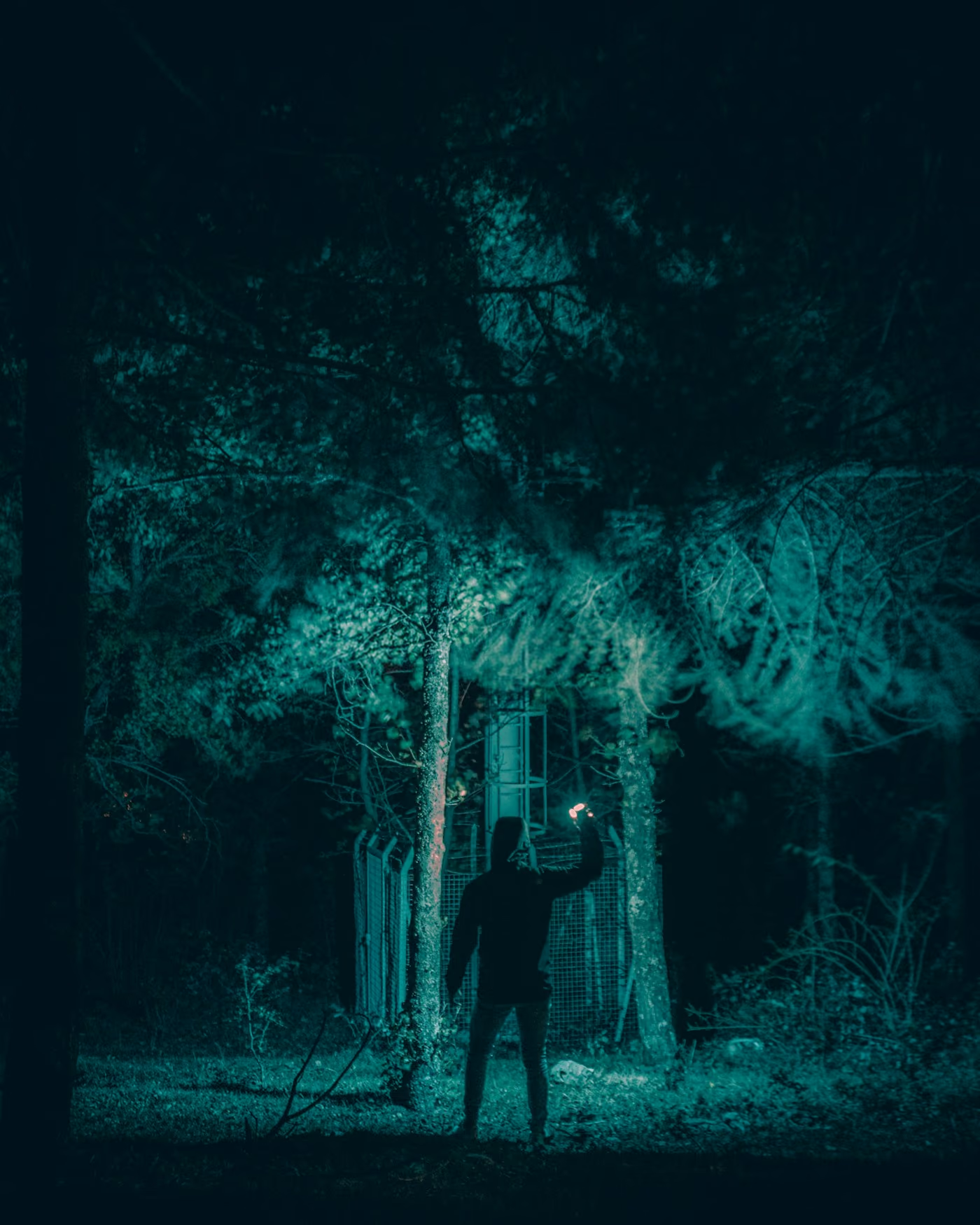
A dropping (a Dutch night-time orienteering game) is one of the few activities where a group entertains itself as soon as it's under way. You drop people off somewhere unfamiliar, they have to get back together, and the rest happens by itself. That makes it attractive to organise yourself, and it also explains why it regularly goes wrong. Below is how to lay out a route, what length suits which age, what is and isn't allowed by law, and at what point doing it yourself becomes more work than it's worth.
What exactly is a dropping?
A dropping is a trip where a group is dropped off at an unfamiliar point and has to find its own way back to an agreed end point. The classic image is a van stopping on a country lane in the dark, but in practice it happens just as often with cars and from a starting point five kilometres from the canteen.
The format comes from youth work and the scouts, and you can tell from the set-up. There's no winner, no audience, and nobody steering the game while it runs. The whole activity is about a group working it out together. That's exactly why it works well with groups that don't know each other that well, and less well with groups in which one person always takes charge.
There are roughly three variants. In a blind dropping the group gets only an end point and nothing else. In a route dropping they get clues or coordinates they have to solve along the way. In a tasks dropping there are tasks along the way that earn points. That last variant is most like a city game, only in the dark and outside built-up areas.
How long should the route be?
A dropping route of five to eight kilometres suits most adult groups. Allow roughly twenty minutes per kilometre, which is slower than normal walking pace. Groups walk slower in the dark, stop to confer, and almost always walk a stretch the wrong way. That wrong turn isn't a flaw in your planning, it's the point of the evening.
For children aged ten to twelve, stick to three to four kilometres. For teenagers from around fifteen it can go up to six or seven. Beyond ten kilometres it changes character: it becomes an endurance trek, about perseverance instead of puzzling things out together, and the mood usually sinks in the last hour.
Measure the route not as the crow flies but along the road they'll actually walk. A starting point that's four kilometres away on the map is soon six by road. Walk or cycle the route once beforehand yourself, even if it costs an evening. You'll then see the things a map doesn't show: a small tunnel that's closed in the evening, a stretch with no verge along a busy road, a cycle path that stops halfway.
Where do you put the starting point?
Choose a starting point that's recognisable enough to find again and anonymous enough not to give away immediately where you are. A crossing of two country lanes works well. A car park by a well-known restaurant doesn't, because then the group is on the map within two minutes. Also avoid places where the only logical route runs along a main road without a cycle path.
How do you keep a dropping safe without taking the tension out?
Safety on a dropping comes down to four things: visibility, a charged phone, an agreed pick-up point and an adult who can be reached. Those four take nothing away from the tension, because they change nothing about the idea that the group has to work it out themselves.
Visibility is the point where it goes wrong in practice. A group of eight in dark clothing on an unlit country road can't be seen by a driver until fifteen metres away. Give everyone a high-vis vest or reflective band, and agree they walk on one side of the road. Head torches are better than torches, because your hands are then free for the map.
Agree beforehand on one phone number that can be reached all evening, and put it on paper instead of only in someone's phone. Also agree when they may call: if they really can't work it out, if something happens, or after an agreed time. Without that agreement, one group calls after ten minutes and another not at all, even when it's necessary.
With minors, ideally someone walks along at a distance, or a car drives around nearby. That doesn't need to be visible. The group doesn't need to know someone's watching, but there must be someone who can be on the spot within ten minutes.
What is and isn't allowed by law?
Many Dutch nature reserves are closed between sunset and sunrise, and that ban also applies to an organised group. Sites managed by Staatsbosbeheer, Natuurmonumenten and the provincial landscape trusts have rules on this that differ per area. Forest rangers do challenge groups on this, so it's not a formality.
Public roads, cycle paths and through sand tracks are in principle accessible. So stay on those, or ask the land manager's permission beforehand if you want to lay a route through an area. That's possible more often than people think, especially outside the nesting season and if you phone ahead.
Also watch out for private land. A path that looks public regularly runs across a farmer's yard. That rarely causes problems if you ask nicely, and almost always does if a group of fifteen comes through at eleven at night without anyone knowing.
How do you turn walking into a programme?
A dropping only becomes a programme if there's something to do along the way besides walking. The simplest form is a series of envelopes the group finds at fixed points, with a clue to the next point and a task that earns points. That does mean someone has to lay out those envelopes beforehand and collect them again afterwards.
A variant that takes less preparation is to work with photo tasks. The group gets a list of things they have to capture on the way, and sends those to a group chat. You then see straight away how far along they are, which is practical too. This is similar to how a task list works, only linked to a route.
A third option is a storyline: the group gets a situation at the start and solves pieces of a riddle along the way. That works well with groups from about fourteen, and it keeps attention up in the last, dullest stretch of the route. It's also the variant that takes the most work to come up with yourself.
When is organising it yourself still worth the effort?
Organising a dropping yourself is quite doable if you know the area, the group isn't too big and you have an evening to scout the route. Allow five to eight hours of preparation for a route with tasks: map work, scouting, devising tasks, preparing materials, and arranging transport and supervision.
Three situations change the answer. With more than about twenty participants, because then you have to work with several groups and several starting points. With a group you want to take part in yourself, because a dropping needs someone outside the game. And for an occasion where it really has to be good, such as a team day or an anniversary, because then a route that doesn't work halfway is an expensive problem.
In those cases you can outsource it. We run droppings in Twente and Overijssel with route, materials and supervision, and build tasks or a storyline around them if you like. On the page about dropping you'll find what that involves and what we provide ourselves.
What a dropping costs
Organising it yourself costs mainly time and little money: vests, lights, some paper and the petrol for taking people there. If you have it done for you, a compact dropping with route, materials and supervision starts at €195. A more extensive set-up with tasks along the way, several groups and a storyline is between €550 and €1,250.
What mainly determines the price isn't the length of the route but the number of groups walking at the same time. Two groups means two starting points, two sets of materials and someone keeping an eye on both. That's the item most people underestimate when they do it themselves.
What to watch for in the planning
Plan the dropping for an evening when it's properly dark, and take the season into account. In June it's only dark after half past ten, which makes a dropping with twelve-year-olds practically impossible. From October to March you can start at seven, and that makes a huge difference to feasibility.
Also look at the weather forecast and have a decision point. Rain isn't a problem, but thunderstorms and gales are, especially if the route passes woodland. Agree the latest time you'll decide and what the alternative is. A group that's ready at eight and then hears it's not going ahead mainly remembers that it didn't go ahead.
If you want something similar but during the day, with a group that doesn't like walking far, there are other formats that give the same feeling. For larger groups they're covered in the article on group games for a large group.
Frequently asked questions
How long should a dropping route be?
A dropping route of five to eight kilometres works for most groups. That's an hour and a half to two hours of walking in the dark, including the time lost to conferring and going the wrong way. For children aged ten to twelve, stick to three to four kilometres. Above ten kilometres it becomes an endurance trek and the playful element disappears.
From what age can a group do a dropping?
From around ten years old a dropping is possible, provided an adult walks at a distance or stays nearby. From about fifteen a group can do it independently, with a phone and an agreed pick-up point. Age mainly determines the length of the route and how much supervision is needed, not whether it can be done.
What do you take on a dropping?
For each group, at least one charged phone, a torch or head torch per person, and reflective clothing or vests. Also water and a small amount of cash in case something goes wrong. A paper map of the area is useful, because a phone battery running out is the most common reason a dropping ends unpleasantly.
Are you allowed to just organise a dropping in a forest or nature reserve?
Not everywhere. Many nature reserves in the Netherlands are closed to the public between sunset and sunrise, and that applies to organised groups too. Stay on public roads and cycle paths, or ask the site manager's permission beforehand. Forest rangers do enforce this in practice, so it's not a theoretical point.
What does it cost to have a dropping organised?
A compact dropping with route, supervision and materials starts at €195. If it becomes a programme with tasks along the way, a storyline and several groups at once, you're looking at between €550 and €1,250. Organising it yourself costs little money, but allow five to eight hours of preparation.
Would you rather not arrange it yourself?
We design and run the whole programme, at your venue or somewhere in Twente. Tell us what you have in mind and we'll send a proposal with a price.
Request a proposal