Planning a stag do
This day rarely fails because of a bad idea, but because of too little planning. Two fixed blocks, starting early, and the drinks only as the finale afterwards.
A stag do rarely falls apart because of a bad idea. It falls apart because of too little planning. The group meets at someone's house, one activity is booked, and after that the day decides itself. Sometimes that works out. More often you're in a pub at five o'clock and the rest of the evening is a repeat of the hour before. Below you'll find how to build the day, what to plan and what to leave open on purpose.
Why this day is so often under-planned
A stag do is usually prepared in less time than a hen party, and you can tell from how it goes. The reason is almost always the same assumption: this group will be fine, we've got each other. With eight old friends that's often true.
It goes wrong as soon as the group is mixed. Two university friends, three colleagues, a brother-in-law and the neighbour don't automatically have a conversation. Without a programme everyone looks for the people they already know, and by three o'clock you have three little groups standing side by side at the bar. That's exactly the scenario the groom never talks about afterwards.
The second reason is the timing. If the day starts at four o'clock, there's room for one activity. That activity takes an hour and a half, and then there are seven hours left that nobody has planned. Starting earlier is the cheapest way to make the day better.
What takes the place of the pub?
Drinks are part of it for most groups, but it works better as the finale than as the programme. Anything active after three beers gets slow, unsafe and less fun than it could have been. The other way round does work: do something first, then sit down with a story to talk about.
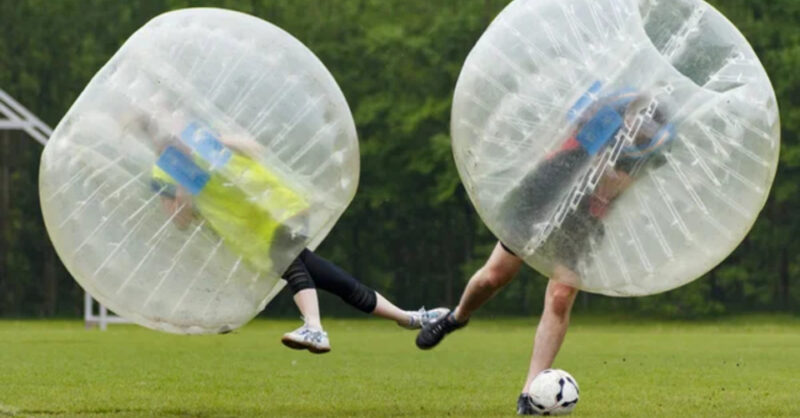
What works well as the main activity is something where the group plays against each other in changing teams. That forces the brother-in-law and the colleague onto the same team, which is exactly the point. Formats that work well with these groups are archery tag, laser tag at your venue and a challenge route through a city.
If you want to keep things calmer, a game that puts the groom at the centre without him having to perform works well. A quiz about himself, put together from answers you've collected beforehand from his mother and his fiancée, costs little and gives a lot back. Specific tasks that go with it are in the article on tasks for a hen or stag party.
How do you structure the day?
Plan two fixed activities and leave the rest open. More than two on one day means you spend the whole day watching the clock, and fewer than two means the day drifts after the first block. Two is the split that holds up in practice.
The first block starts around half past twelve or one o'clock and is the physical or active part. That's deliberately early: everyone is sober, energy is high and the weather is better than later in the day. Allow an hour and a half to two hours, including changing and the briefing.
The second block starts after a break, around four o'clock, and is calmer in nature. This is the moment for the quiz, the game about the groom or anything where people sit and laugh. After that you can eat, and the programme stops. Nobody needs to plan what happens after eight o'clock.
The changeover is the riskiest moment
A group falls apart fastest between two activities. Make sure the changeover takes no longer than half an hour and that everyone knows where to go. An hour waiting at a station or car park takes more out of the day than a mediocre activity. So arrange transport in advance, even if it's only three kilometres.
Who do you invite?
Invite the people the groom would notice were missing, and keep the group between eight and twenty people. Under eight you can do almost everything spontaneously and don't need a tight plan. Over twenty you have to book everything and the day becomes an operation instead of an outing.
Think about the mix in advance. If three colleagues are coming who don't know anyone else, plan a first activity in which the teams are shuffled. If the groom's father or father-in-law is coming, check whether the programme works for him too, or invite him for a set part of the day.
If in doubt, simply ask the groom whether he's happy for someone to come along. That gives nothing away about the programme and avoids the awkward situation where a colleague spends the whole day on the edge of the group. For a former colleague or a brother-in-law you're not sure about, that one question in advance is worth it.
What do you tell the groom?
Give him three things: what time to be ready, what to wear and whether there's anything physical involved. He doesn't need more, and less is awkward. Someone who turns up in smart shoes for an afternoon in a field has no appetite for the first two hours, and that spoils the start of the day.
Also check with his partner or a brother what he really doesn't want to take part in. For almost everyone it's one specific thing. You don't need to argue about it, you just don't plan it.
How do you arrange transport if people are drinking?
Arrange transport centrally rather than per person as soon as alcohol is involved. A minibus with a driver, a fixed taxi or a programme that's entirely within walking distance. Agreements about who drives rarely hold at a stag do, and that's understandable: nobody wants to be the exception all day.
If one person has to drive, agree that they get something back. Waiving their share of the costs works, and it's cheaper than a taxi. Whatever you do, don't leave it as an open question to be answered on the morning itself.
Think about the end of the evening too. The way there sorts itself out because everyone's enthusiastic. The journey home at half past one is the moment people end up standing in the street on the phone. State in the invitation what time it finishes and how everyone gets home.
What's better not to do?
Skip anything that makes the groom look foolish without him having asked for it. That's the line where most stag dos fall apart, and it's in a different place for everyone. A group that has known him for twenty years often knows exactly where that line is, but the colleague who's joining for the first time doesn't.
Also avoid things that make the rest of the day impossible. Drinking heavily early in the day sounds like a good start and in practice means the afternoon part doesn't go ahead. The same goes for anything physical that's too tough: if half the group is wiped out by three o'clock, the evening is over before it begins.
Watch out for activities where taking part feels compulsory, too. Almost every group has someone who won't step forward. Give that person a role that isn't taking part but still contributes, such as referee or photographer. That works better than persuading, and usually they join in later anyway.
What does it cost?
Most groups spend between €40 and €120 per person for the whole day, including food, drink and transport. The programme is rarely the biggest cost within that. Food, drink and transport usually are, especially if a minibus is involved.
If you have us run the programme, a compact activity for part of a day starts at €195 for the whole group. A custom programme with its own theme and several activities is between €550 and €1,250. Collect the money in advance rather than afterwards, because sending a payment request to sixteen men after the event is a project in itself.
Include the groom in the budget too. The usual arrangement is that he pays nothing, not even his own food and drink, and that the rest split it between them. For a group of twelve that means about nine per cent extra per person. Say so straight away when you send round the amount, because paying extra afterwards goes down badly.
When do you outsource it?
Outsourcing is worth it as soon as you want to join in yourself. Whoever runs the day is working throughout: they keep track of time, know what's coming and never get a moment off. In a group of friends that's often the best man, and he'd have liked to join in himself.
The second reason is group size. Above about fifteen participants, one person isn't enough to run an active game, and it gets messy. What we handle in that case is on the page about hen and stag parties in Twente.
If you're organising something for a woman, different things come into play, mainly around the guest list. They're covered in the article on a hen party.
Frequently asked questions
How early in the day do you start a stag do?
Start around twelve or one o'clock if there's an active activity involved. That leaves room for two blocks and an evening, without the day feeling over by ten o'clock. If you only start at four o'clock, in practice one activity is left and the rest drifts to the pub.
Does a stag do need drinks?
No, and it actually works better when drinking isn't the programme. Drinking during an active activity takes the pace out and makes the second half of the day fall flat. Plan the active part first and start the drinking afterwards, and both hold up.
How big is an average group at a stag do?
Between eight and twenty people is usual. Under eight you can do almost anything spontaneously. Above twelve you need to book, arrange transport and have a programme, because otherwise the group splits into small cliques doing their own thing.
What do you tell the groom in advance?
Tell him what time to be ready, what to wear and whether there's anything physical involved. Nothing else. Those three things don't give the programme away and stop him starting the day in the wrong shoes or with a hangover.
What does a stag do cost per person?
Most groups spend between €40 and €120 per person, including food, drink and transport. The programme itself is usually not the biggest cost within that. A hosted programme for part of a day starts at €195 for the whole group.
Would you rather not arrange it yourself?
We design and run the whole programme, at your venue or somewhere in Twente. Tell us what you have in mind and we'll send a proposal with a price.
Request a proposal