Team building
Twente
Beyond the standard escape room. A team building concept built around what this team needs, not around what happens to be in the cupboard.
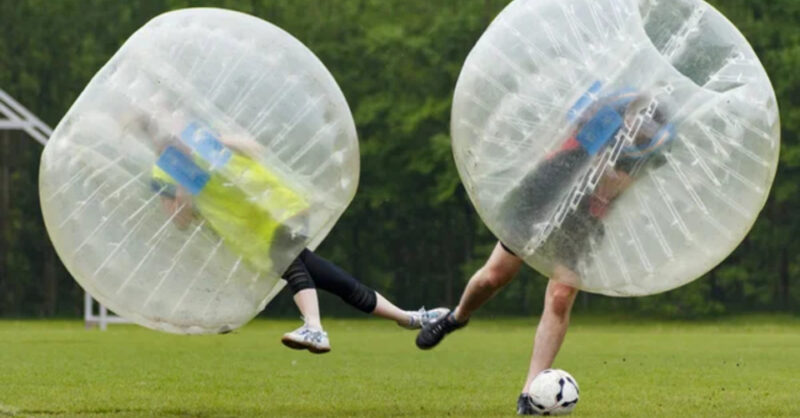
A programme that suits this team, right now
Escape rooms and bowling are tried and tested, but they work the same for every team and therefore for no team in particular. We build a concept around this team's situation: just merged, just grown, or simply ready for something other than yet another round of drinks.
- Multiplayer challenges and crisis simulations
- Concepts for mergers, new teams or department changes
- Suitable for 15 to 60+ people
- Reflection moment built in, no stand-alone game without follow-up
Four formats that force collaboration
A game only becomes team building when its set-up forces something that doesn't happen by itself in day-to-day work. These are the four mechanisms we use most often, usually in combination. Which one fits depends on what is going on, and we ask about that in advance.
Divided information
Each small group has a piece of the puzzle and nobody has the whole. Collaboration is then not an assignment but the only way to make progress. This is the format that shows most quickly who shares information and who holds on to it.
A shared opponent
The team doesn't play against each other but against the clock, against a scenario or against us. Works well for teams where internal competition is already high enough and something actually needs to be shared.
Changing roles
Halfway through, who is in charge changes. That brings people into the conversation who normally sit back, and the person who always steers finds out what it is like to follow.
Physical and mental work alternating
A block in which you are on the move and a block in which you have to think. That keeps energy up and means the same people do not always shine.
When is team building pointless?
Team building doesn't resolve a conflict about the content of the work. If a reorganisation is coming, if there is disagreement about direction, or if something is going on between two people that everyone can sense, then an afternoon of playing together becomes uncomfortable rather than useful. That belongs in a conversation, not in a programme.
What it does work for: a team that has just been merged, a department that has grown without the new people feeling part of it, or colleagues who mainly see each other in meetings since working from home. There it helps to spend a few hours together doing something in which the usual division of roles doesn't apply.
If there is actually nothing wrong and it simply needs to be a fun day, we build that too. We just wouldn't call it team building then, but a company outing.
Which concepts does this appear in?
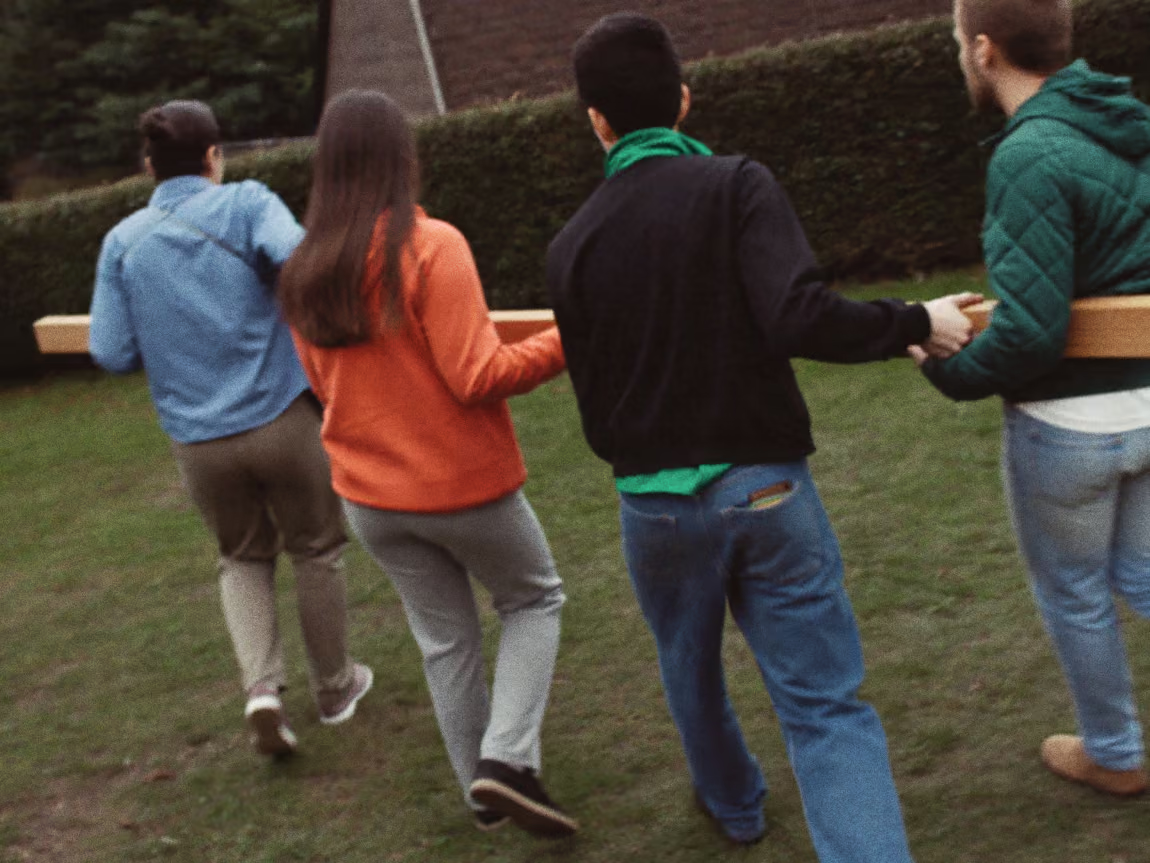
The formats above are part of almost everything we run, just in a different guise. A team games day sets them up physically, a TV-style game concept wraps them in a recognisable format, and a city game gets the team out of the door.
If it has to stay indoors, a murder mystery dinner, life-size board games or one of the other indoor activities work just as well. On the activities page they are all together.
You don't have to choose in advance. Describe the team and what is going on, and we'll propose the format that fits.
Frequently asked questions
What is the difference between team building and an ordinary company outing?
The main aim of a company outing is relaxation. The aim of team building is that the team works together differently afterwards. We do both, but the set-up and the reflection afterwards differ.
What group size does team building work best for?
Between 15 and 60 people is the sweet spot. Below 6 it quickly becomes coaching, above 100 you lose individual connection, unless the concept is built from parallel sub-teams.
Can team building also work for a hybrid or partly remote team?
Yes, provided the concept is designed for it. One day together in person, with activities that also give a role to those who can't be there, works better than a stand-alone online game.
How long does a team building programme take?
Our team building programmes usually take part of a day, so three to four hours including a break and the conversation afterwards. Shorter than two hours rarely works, because then there is no time to see something happen and then name it. A whole day is possible, but then we divide it into blocks with a clear change in between.
What do we need to arrange ourselves?
For team building we need a room or outdoor space that suits the group size, power, and someone who can tell us in advance what is going on in the team. We bring the equipment, assignments and hosts. Setting up takes us about an hour, and that time falls outside the programme.
What does custom team building in Twente cost?
A compact format starts at €195. Market prices at traditional agencies are often between €3,000 and €15,000 for comparable work. After the first conversation you get a concrete price.
Tell us about your team building
Just fill in the short form. As soon as we have a picture of the group and the occasion, we'll send a price estimate within 1 working day.
Build team building that sticks
Tell us about your team and the situation, and we'll think along with no obligation.